Ten days, two countries, two very different paces. Rome for five nights, loud and ancient and chaotic in the best way, and then Cap-Ferrat for four, where the whole world seemed to slow down to match the Mediterranean. Ashleigh and I have been to Rome a few times before, so this trip was about going deeper on the things we love rather than checking off landmarks. The Riviera was new territory, and it exceeded every expectation.
Rome
Arrival & First Night (April 15)
We flew Delta overnight from JFK, landed at Fiumicino, and had a car waiting to take us to the Hotel de la Ville, a Rocco Forte property on Via Sistina, steps from the top of the Spanish Steps. We’d stayed at the Rocco Forte Villa Igiea in Palermo the year before and came away genuinely impressed: the service, the attention to detail, the sense that the properties are curated rather than just branded. When we were planning Rome, going back to Rocco Forte was an easy call. The goal for the first afternoon was simple: stay awake, get oriented, and eat something good. The hotel is perfectly situated, close enough to everything that you can walk to most of the centro storico (Rome’s historic center), but elevated enough on the hill that the rooms feel removed from the noise.
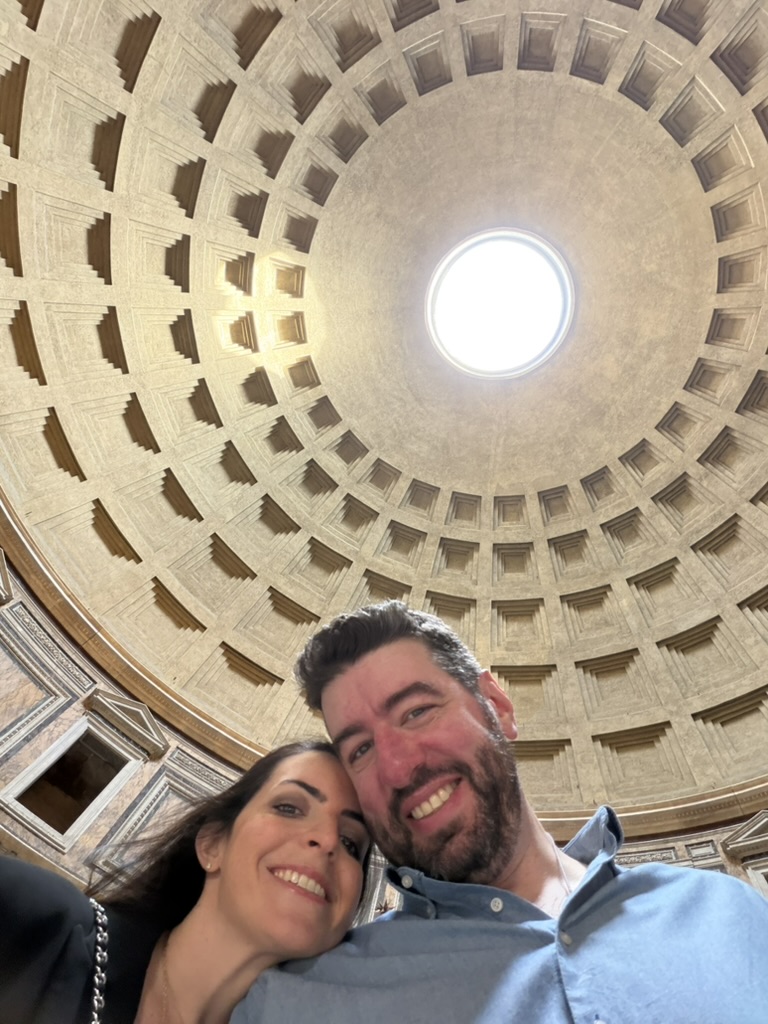
We walked down to the Pantheon in the late afternoon and spent about 20–30 minutes inside. It was our third or fourth visit between us, and it still stops you cold. There’s nothing else quite like standing under that dome: 2,000 years old, open to the sky, and somehow still the most impressive room you’ve ever been in. The scale of it, the geometry, the fact that the Romans built this without any of the tools we take for granted. It resets your sense of what human beings are capable of.
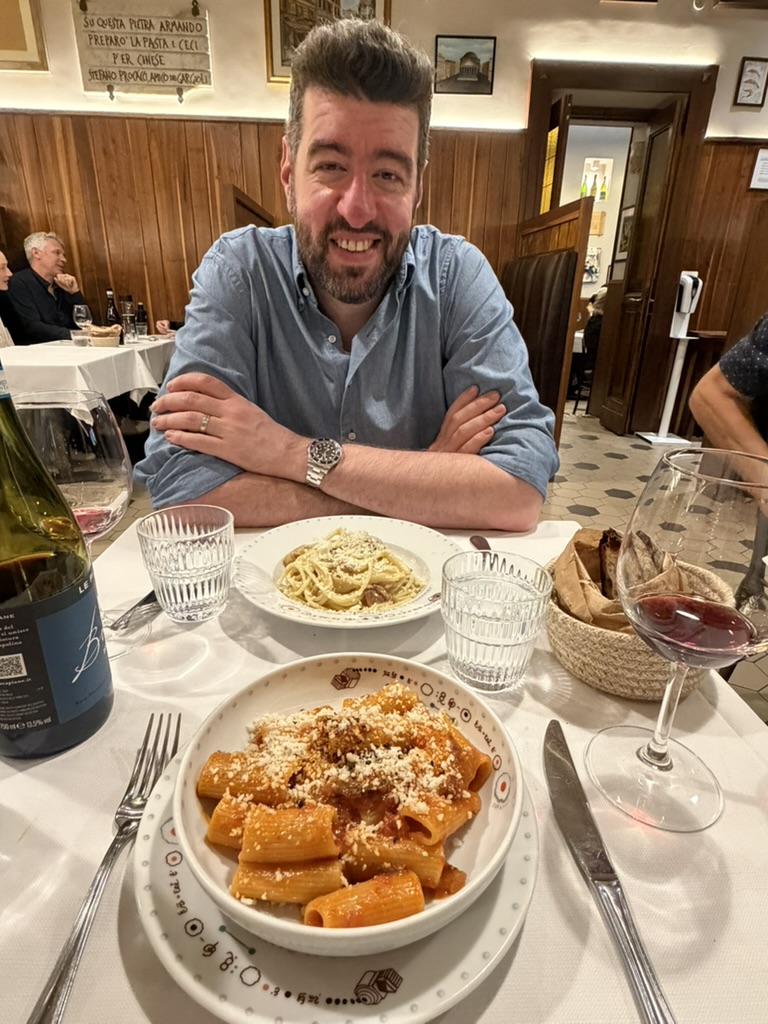
For dinner we had a reservation at Armando al Pantheon, a family-run trattoria that’s been operating since 1961 literally steps from the Pantheon. It turned out to be one of our best meals in Rome: classic Roman cooking, great service, and a warm room that felt exactly like what you want on a first night in the city. The spaghetti alla carbonara and rigatoni all’amatriciana were as good as either dish gets. One thing worth noting: there were people trying to walk in without reservations and being turned away throughout the evening. Book ahead, and book early.
After dinner we made it back to the hotel for a nightcap at the Cielo Rooftop Bar, the rooftop perch above the Spanish Steps with panoramic views across the city. It was late, we were jet-lagged, and somehow still wide awake. That’s Rome for you. The Cielo ended up being one of our most-returned-to spots of the entire trip, and a big part of that is Matteo, the head manager, who has the rare quality of making you feel like a regular on your first visit. The views at night, city lights spreading toward the horizon and St. Peter’s dome hovering in the distance, are worth engineering your evening around.
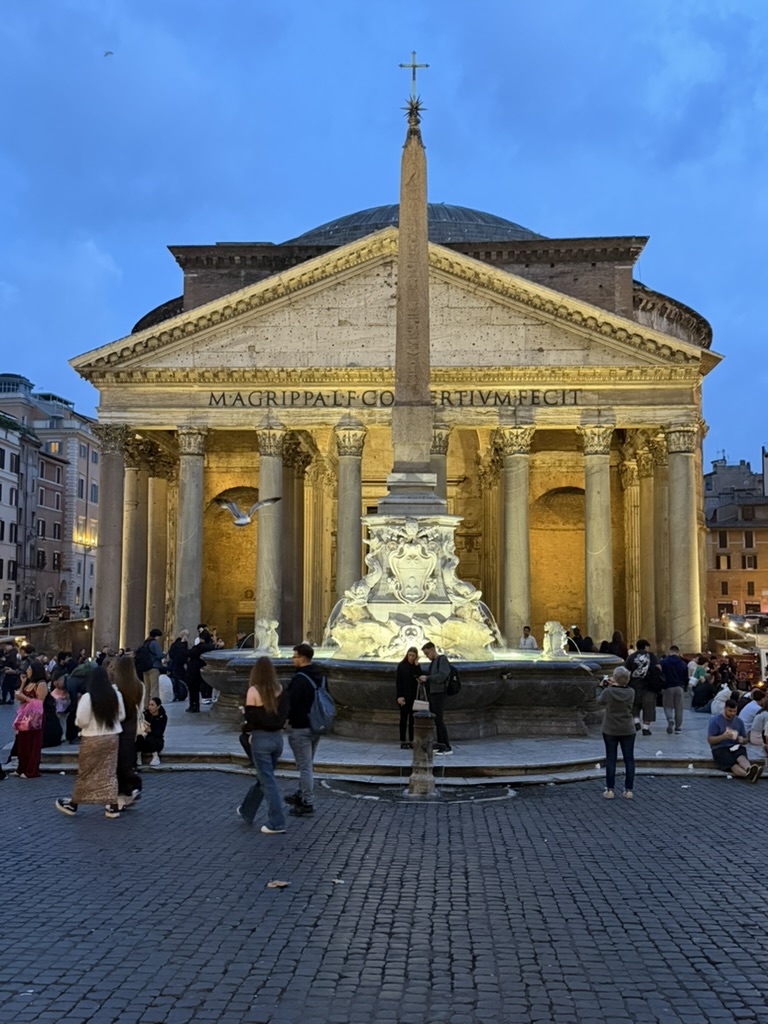
We walked past the Pantheon again on the way back to the hotel just as the last light was fading from the sky. There’s something about the way it’s lit at dusk, the golden stone, the obelisk fountain in front, the piazza still full of people, that makes the building feel alive in a way that photographs never quite capture. A good first night by any measure.
Campo de’ Fiori, the Colosseum & Roscioli (April 16)
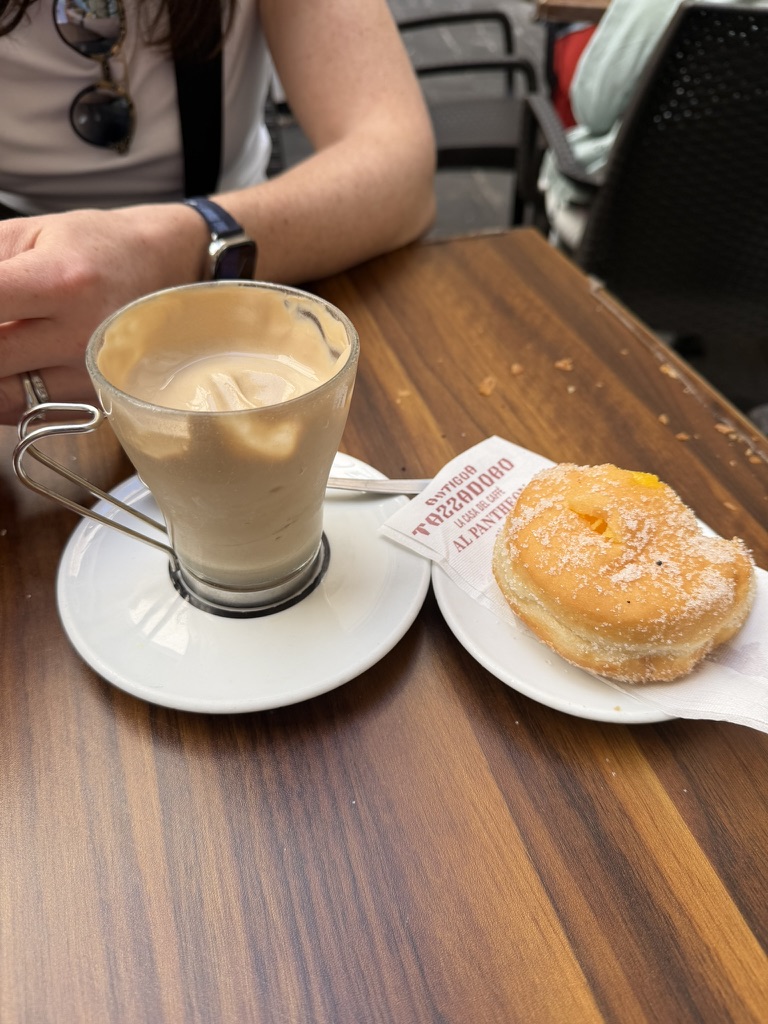
Day two started at La Casa del Caffè Tazza d’Oro, just behind the Pantheon, my favorite coffee in Rome and another recommendation from my friend Frank. The espresso is exceptional and the granita di caffè in summer is legendary. It’s one of those places that’s been doing the same thing for decades, does it extremely well, and has no reason to change. Don’t skip it.
From there we wandered through Campo de’ Fiori, which has a great morning market. It’s a beautiful square, but the market is most useful if you’re staying somewhere with a kitchen: it’s a produce, meat, and cheese market more than a tourist one, and that’s what makes it worth visiting. The square itself is lively at any hour, and the streets radiating out from it lead you quickly into some of the best eating and drinking in the city.
Nearby, Il Goccetto is one of Rome’s most iconic wine bars, a cozy, wood-paneled room on Via dei Banchi Vecchi with a remarkable wine list, surrounded by Michelin-starred neighbors. It’s a great place to rest your feet after a long morning of walking. Right around the corner, Supplizio is one of my favorite spots in all of Rome. The location is tiny, the supplì are extraordinary, crispy fried rice balls with molten fillings, and it’s the kind of place that makes Roman street food feel like a serious art form. We’ve been multiple times and it never disappoints.
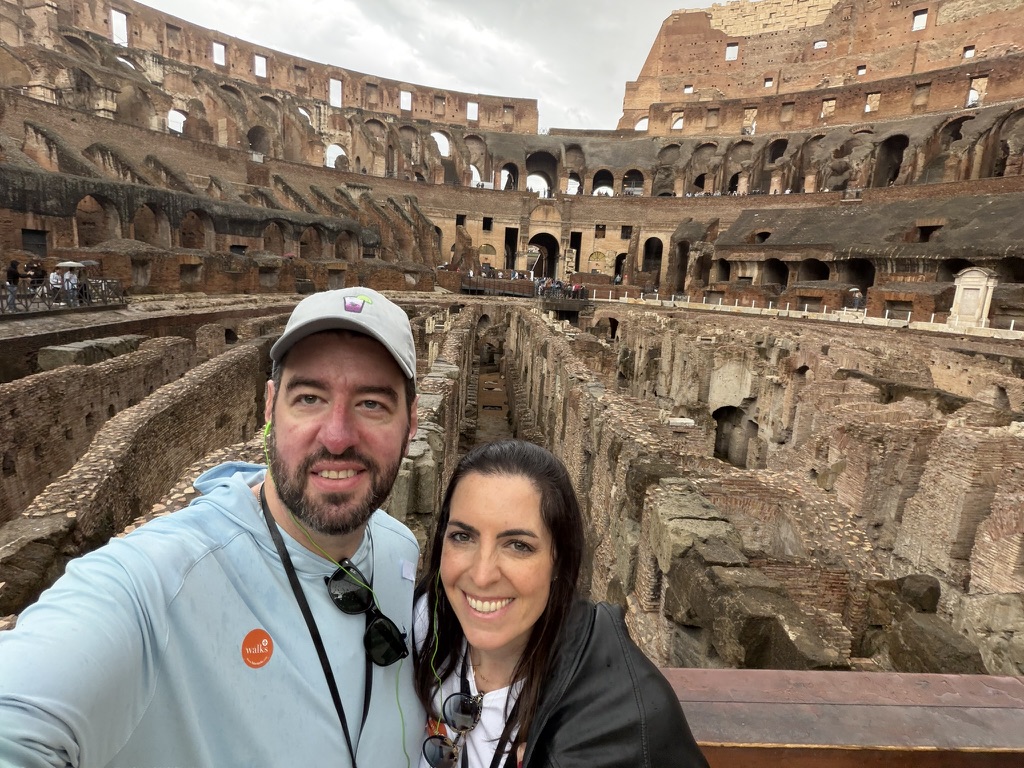
In the afternoon we had a guided tour of the Colosseum Arena Floor and Roman Forum. We’d been to the Colosseum before but had never walked the actual arena floor, and it’s a completely different experience than viewing it from the seats. Standing at the center, looking up at the tiered walls surrounding you on all sides, you get a visceral sense of what it must have felt like to enter that space. Unfortunately, a freak downpour cut the second half of the tour short and we ended up ducking into a nearby caffè to dry off. The caffè itself isn’t a recommendation, but the hour we spent there was one of those unplanned Roman moments: we ended up talking for a long time with a couple from Australia who were at the table next to us. That kind of spontaneity is one of the things I love most about Rome.
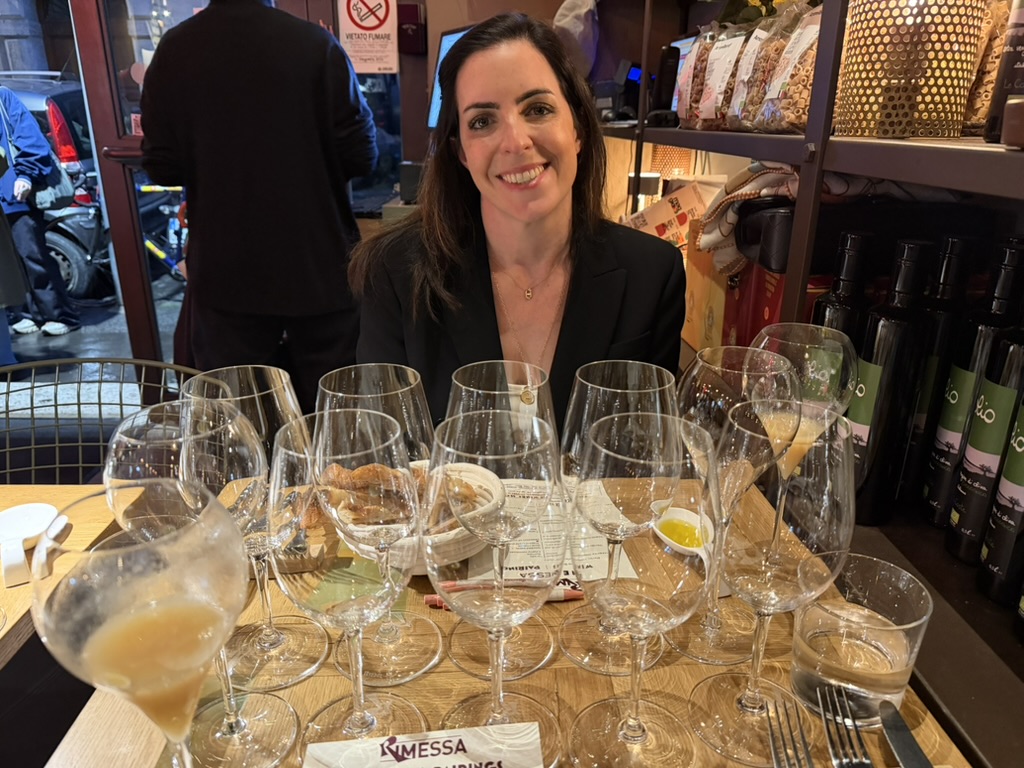
The evening more than made up for the afternoon. Rimessa Roscioli is a new venture from the larger Roscioli group, a wine cellar on Via del Conservatorio focused entirely on paired wine tastings with food. It opened within the last six months and it’s already exceptional. The format is intimate: a long communal table in a proper wine cellar, with pairings curated around an evolving selection of Italian and European bottles. We were lucky enough to have Alessandro Pepe, the owner, host our evening personally, which made it something genuinely special. If you’re a wine person visiting Rome, this is the reservation to prioritize.
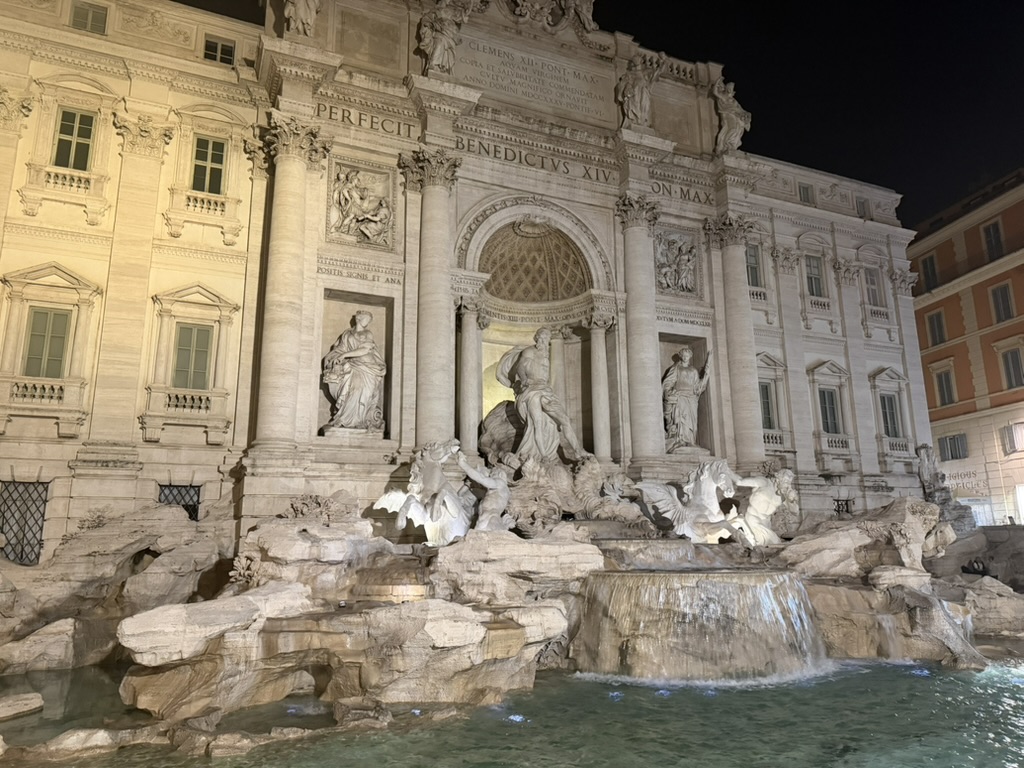
On the walk home we stopped at the Trevi Fountain, hoping to catch it at a quiet moment. It was late enough that the crowds had thinned considerably, and while we were there, we watched someone propose. The fountain at night, lit up and nearly empty, is dramatically different from the daytime scrum. One of those only-in-Rome nights where things just fall into place without you planning them.
The walk back to the hotel from the Trevi takes you through some of the most beautiful streets in Rome: narrow lanes, cobblestones, the occasional piazza opening up unexpectedly. We took the long way and didn’t regret it. The city at midnight belongs to a different crowd than the afternoon, and it’s worth staying up to see it.
Doria Pamphilj, Trastevere & Jerry Thomas (April 17)
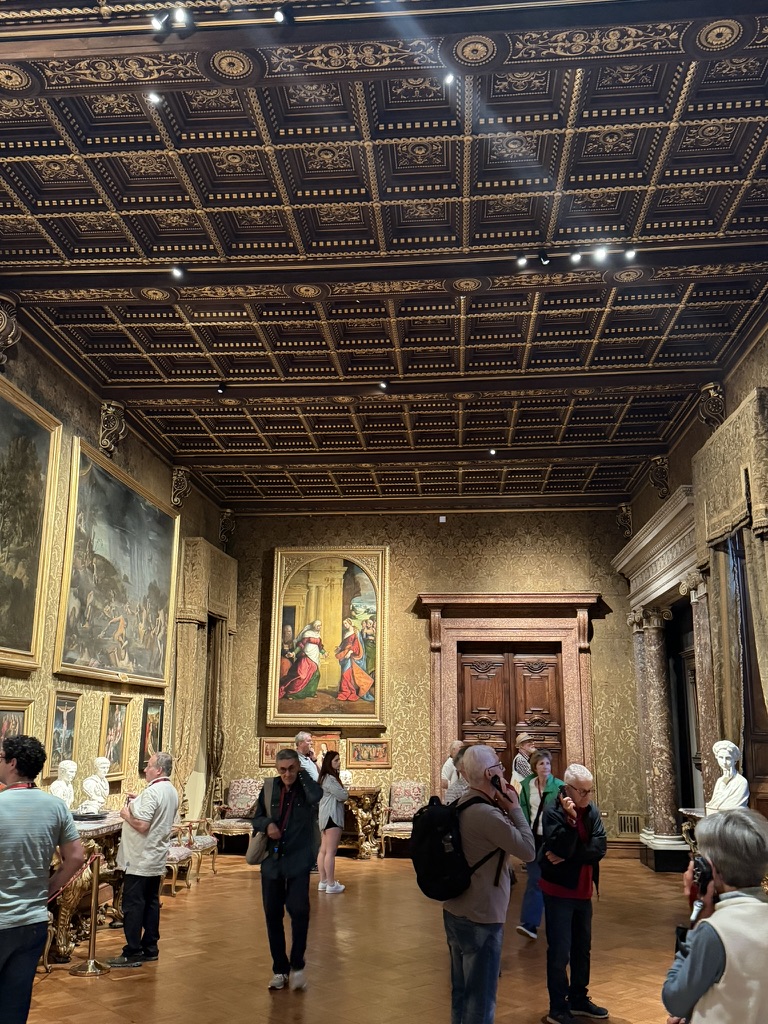
Walking home from the Trevi the night before, we passed by the Galleria Doria Pamphilj and noticed the frescoed ceiling through the entrance. We decided on the spot to go back the next morning, and it was the right call.
The Doria Pamphilj is one of Rome’s finest private art collections, still owned and maintained by the family whose name it carries. The story of the collection spans centuries and connects directly to modern descendants who still live in part of the palazzo. The paintings and sculpture are extraordinary, but the galleries themselves, the proportions, the ceilings, the way the rooms flow into each other, are as impressive as anything on the walls. The audio guide, narrated by a current family member, adds a layer of context that turns a beautiful gallery visit into something closer to a history lesson delivered by someone with skin in the game.
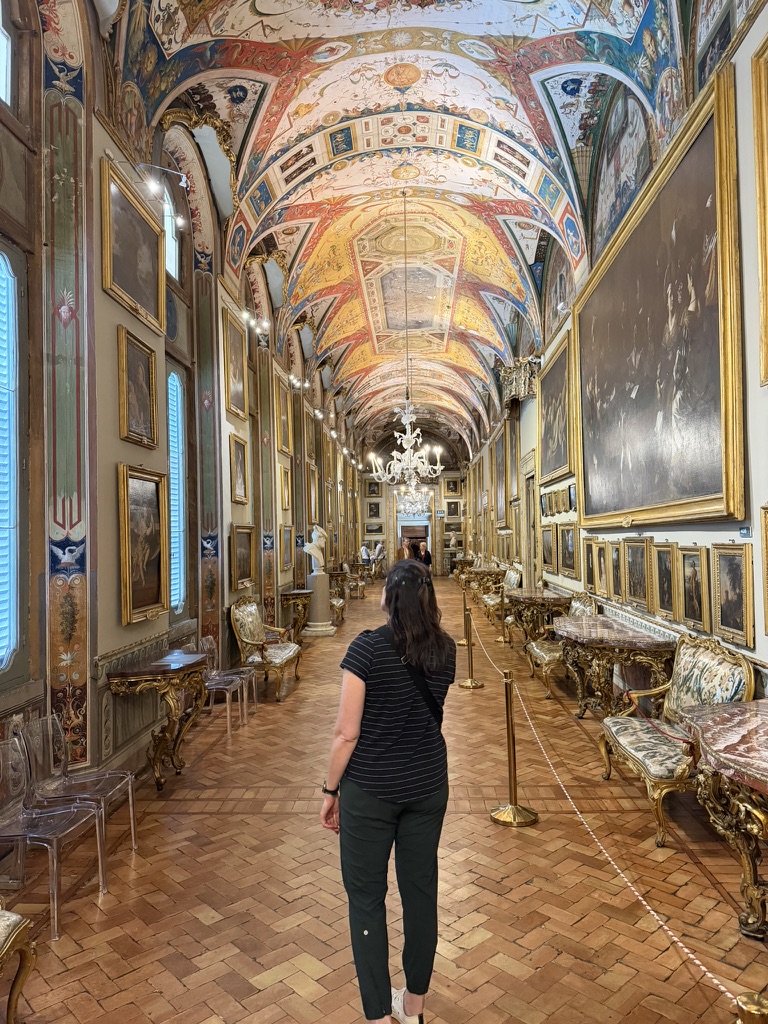
The collection includes Velázquez’s portrait of Pope Innocent X, one of the most arresting portraits in existence, alongside works by Caravaggio, Raphael, and Titian. What makes Doria Pamphilj different from most galleries of this caliber is the density of the hang: paintings stacked floor to ceiling in the old style, the way they were originally displayed. It takes some adjustment, but once you settle into it you realize you’re seeing the collection as it was intended to be seen.
After the gallery we stopped at Caffè Sant’Eustachio, one of Rome’s most storied coffee institutions, operating since 1938 just steps from the Pantheon. The special espresso is excellent, and the cafe is a great spot for people-watching. It’s the kind of place that has earned its reputation over decades and doesn’t need to try very hard anymore.
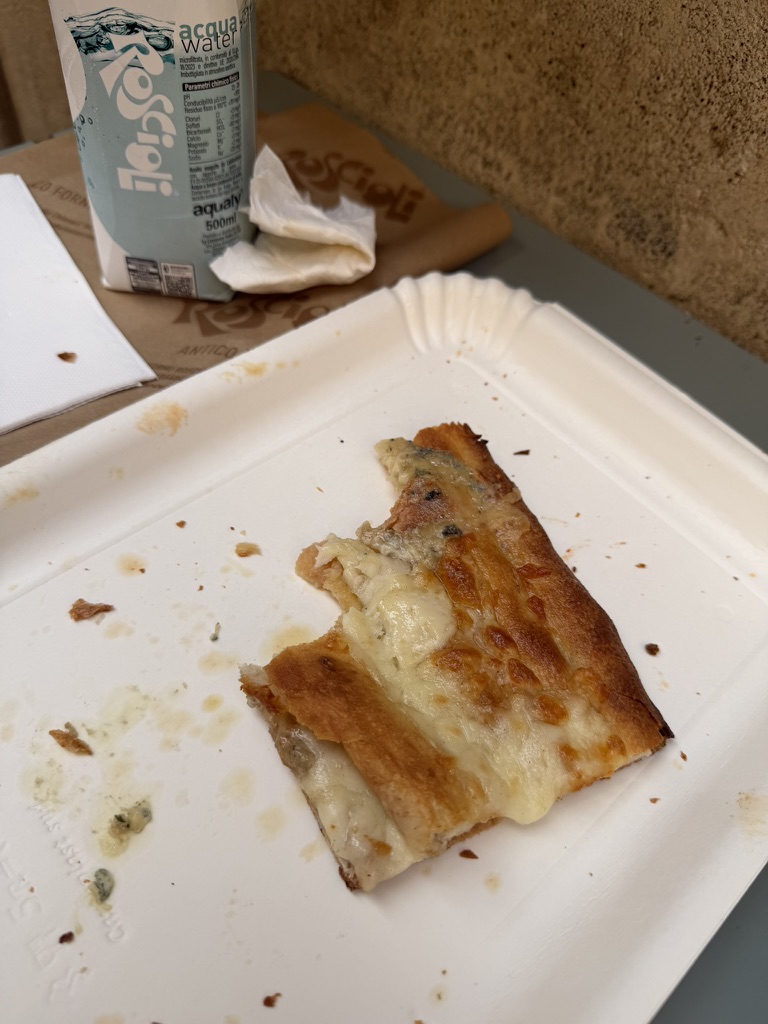
Lunch was a quick stop at Antico Forno Roscioli on Via dei Chiavari for pizza al taglio. This is a completely different operation from the wine cellar, a bakery and deli that’s been there for decades. The pizza bianca and the cheese-topped slices are some of the best you’ll find in Rome. Eat standing up, eat it while it’s hot, keep moving.
After some shopping on Via dei Condotti we returned to the hotel for sunset aperitivo at the Cielo Rooftop Bar. I need to properly credit this place: it became a genuine highlight of our Rome stay, and a lot of that is down to Matteo, the head manager, who looked after us every time we came back. The rooftop sits above the Spanish Steps with views across the entire city, and on a clear evening with a Negroni, there isn’t a better place to be in Rome. We deliberately built our dinners around it, pushing reservations later so we had time to watch the sunset from up there before heading out.
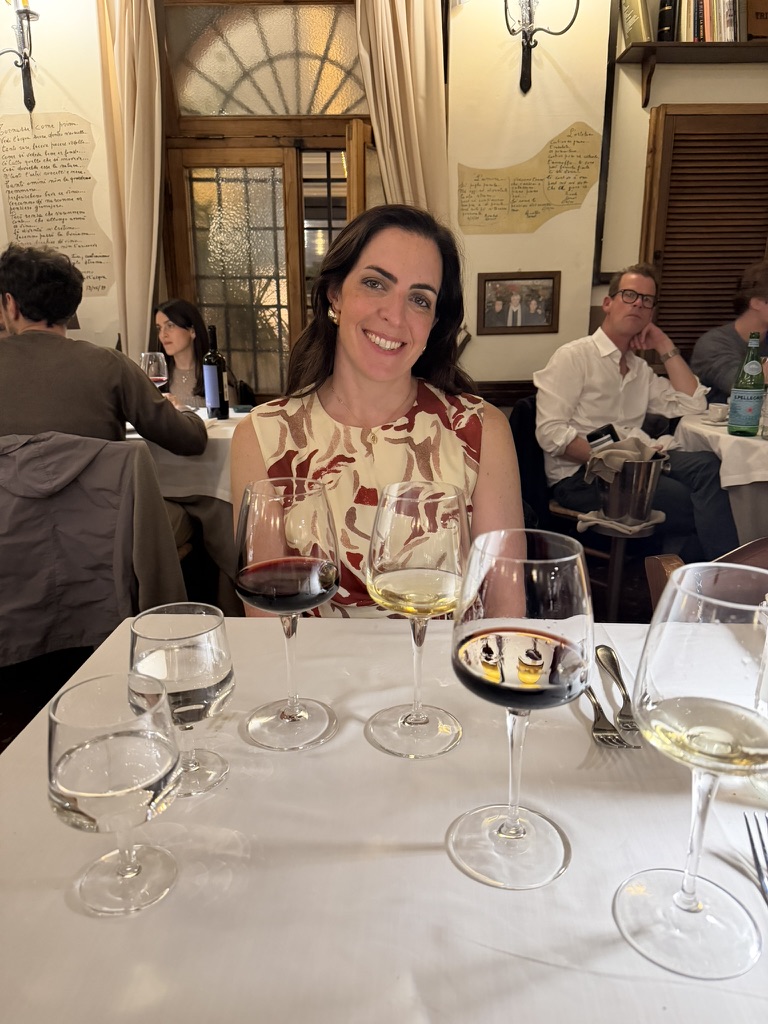
For dinner we crossed the river to Trastevere and ate at Taverna Trilussa, one of the longest-standing restaurants in the neighborhood. We did the tasting menu with the wine pairing, and it was excellent: traditional Roman cooking done with care and consistency. Trastevere itself is worth the walk across the river: cobblestone streets, ivy-covered walls, the kind of neighborhood that feels genuinely lived-in rather than performed for tourists.
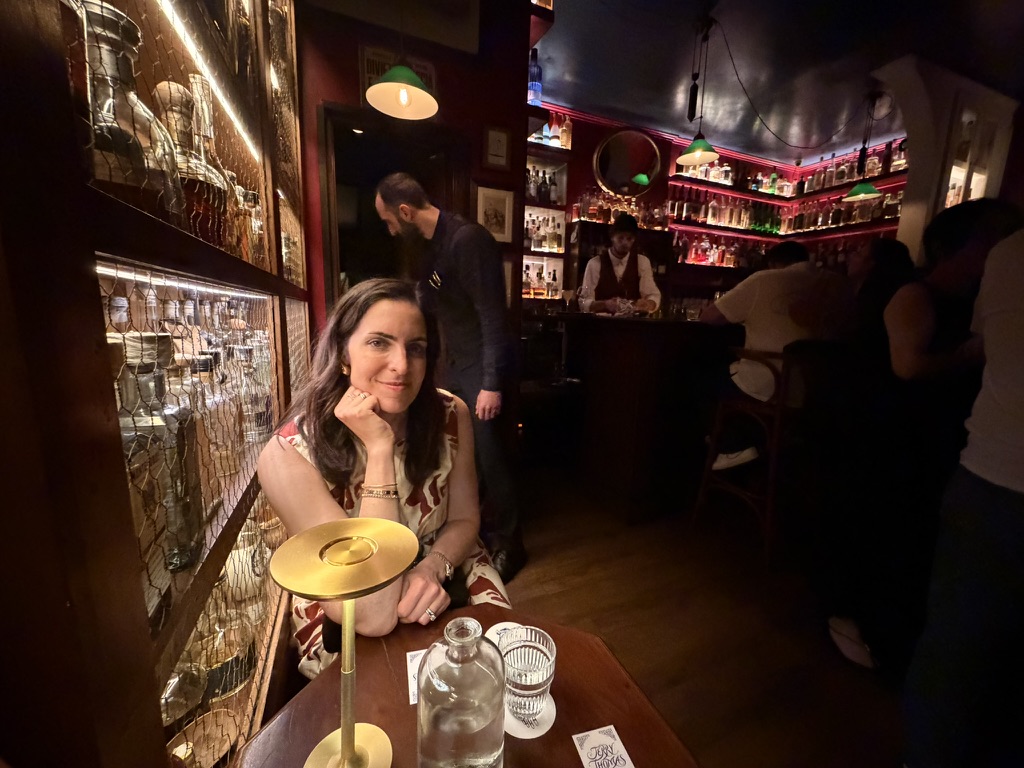
To cap the night, we found our way to Jerry Thomas Speakeasy, a proper American-style cocktail bar hidden in the centro storico. The vibe is exactly what you’d want: dark, intimate, great spirits, serious bartenders who know their history. You ring a bell to get in, which sets the tone. Reservations are required and book up well in advance, so plan ahead. The menu leans into classic American cocktail culture: pre-Prohibition recipes, proper technique, no shortcuts. I ordered the Blue Blazer, made with Johnnie Walker Blue Label. I was wearing my blue blazer. It felt like the right call.
The walk home took us through empty streets past the Campo and along the river, one of those late-night Roman walks that feels like the city is yours. We’d been out since morning and somehow weren’t tired. That’s what good food, good wine, and good company will do.
Borghese Gallery & Last Night in Rome (April 18)
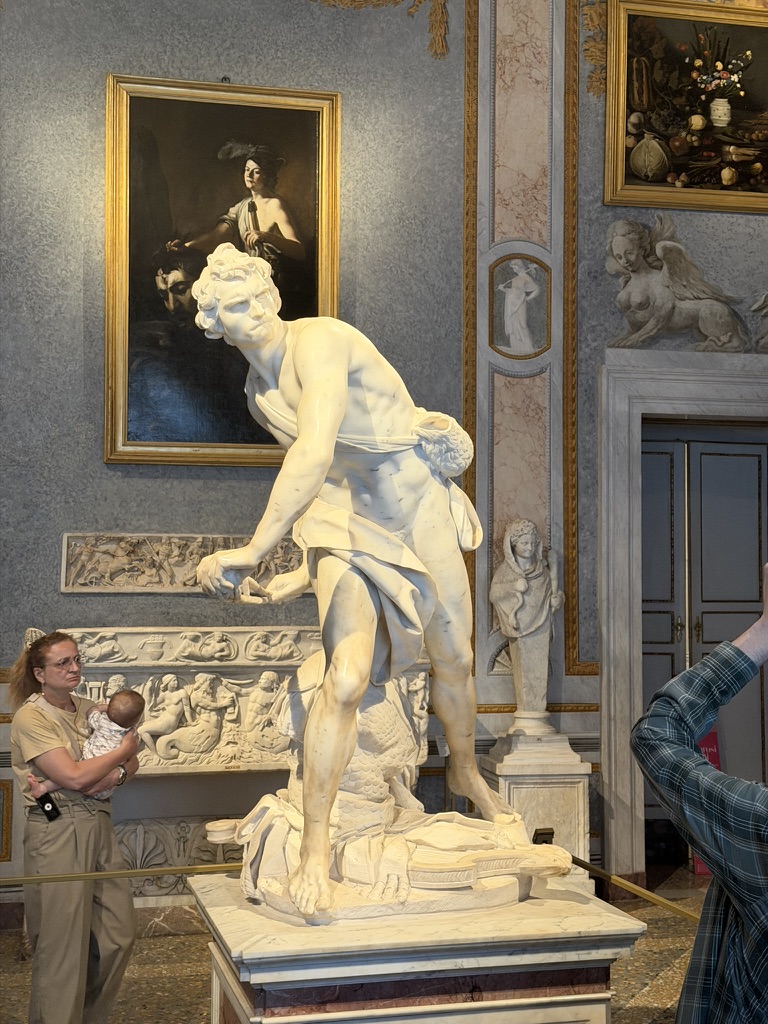
Friday was the Borghese. If you haven’t been, put it at the top of your Rome list. The Galleria Borghese houses one of the greatest collections of Bernini sculpture in the world, alongside Caravaggio paintings and fresco ceilings that are themselves works of art. You need a timed reservation, as entry is limited and strictly enforced, but the experience of moving through those rooms is unlike anything else in the city. We booked through Doooing Experience and our guide was Alessandra, who brought a level of depth and context to the collection that you simply won’t get on your own. Like the Doria Pamphilj, it’s also a story about a Roman family that extends to the present day, and that context makes the collection land differently.
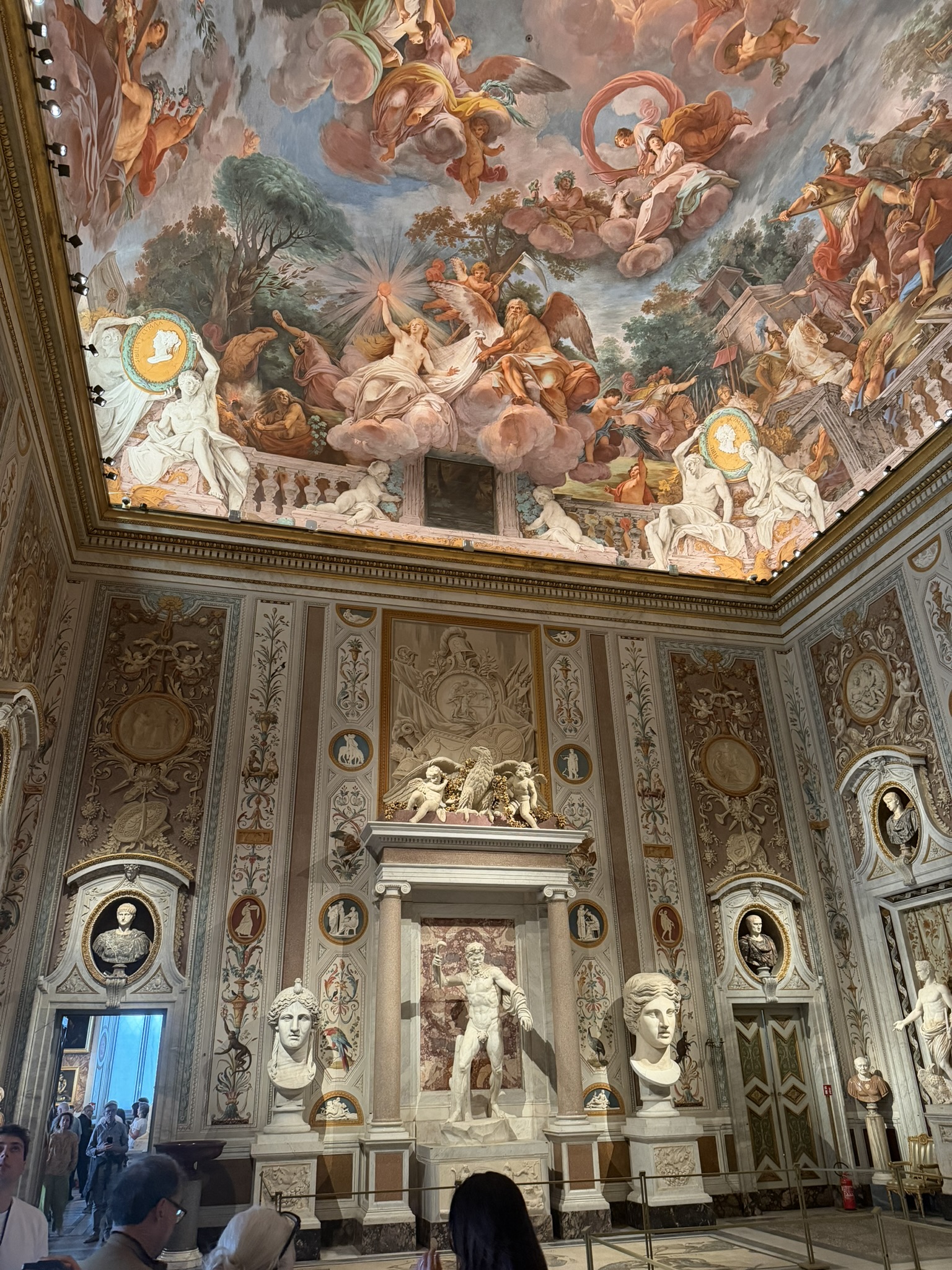
Bernini’s work here is simply on another level. The ability to render marble as though it’s flesh, fabric, or water, at a scale that fills a room, is something photographs don’t do justice to. You have to stand in front of it. The rooms themselves are part of the experience: gilded ceilings, colored marble floors, natural light filtering through windows that have barely changed in three centuries.
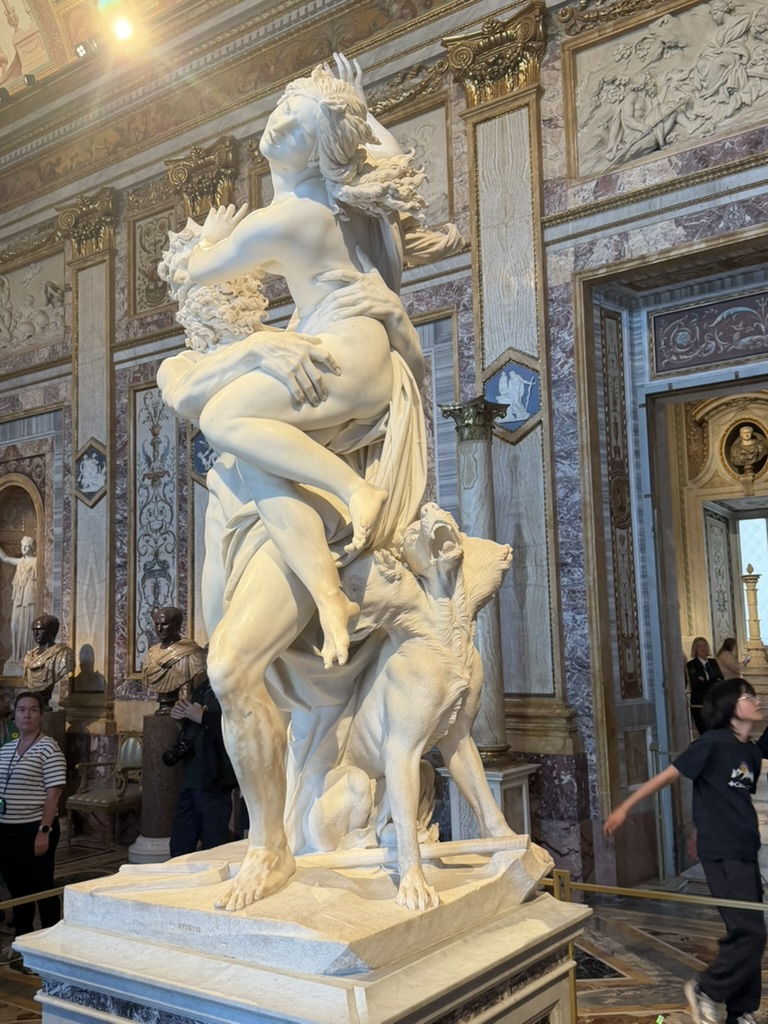
The Rape of Proserpina is the piece that stops everyone. Pluto’s fingers pressing into Proserpina’s thigh, the marble yielding like skin, is one of those moments where you genuinely cannot believe it’s stone. Bernini was 23 when he made it. The room goes quiet when people encounter it for the first time, which is rare in a busy gallery and says everything about what the sculpture does to people.
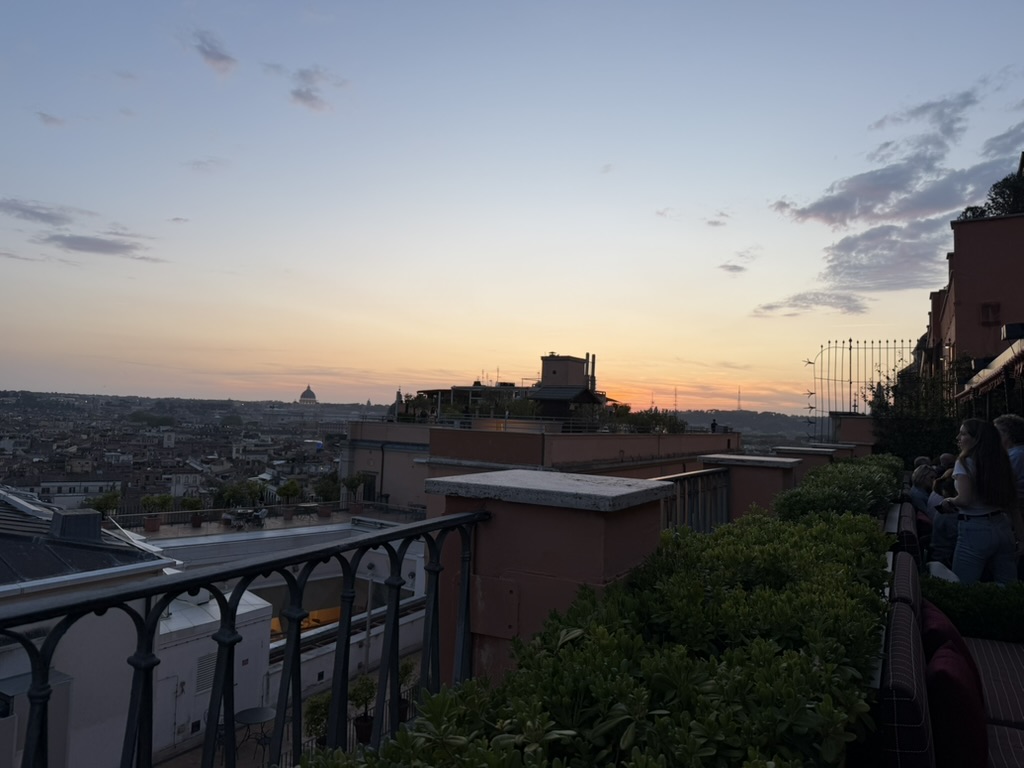
We pushed our dinner reservation later specifically so we could spend the early evening on the Cielo rooftop and watch the sun go down over Rome. St. Peter’s dome in the distance, the city turning golden, the whole skyline changing color over the course of an hour. It’s worth engineering your schedule around. This became our ritual: aperitivo at Cielo first, dinner after. It’s a good way to live.
Dinner was at Cesare al Pellegrino in the centro storico, a well-regarded restaurant that came highly recommended, and the food was genuinely very good. That said, Rome has so many excellent restaurants that I’m not sure it would rise to the top of a return visit. In a city with this much competition, “very good” only goes so far. It’s a perfectly fine dinner; just not a destination in itself.
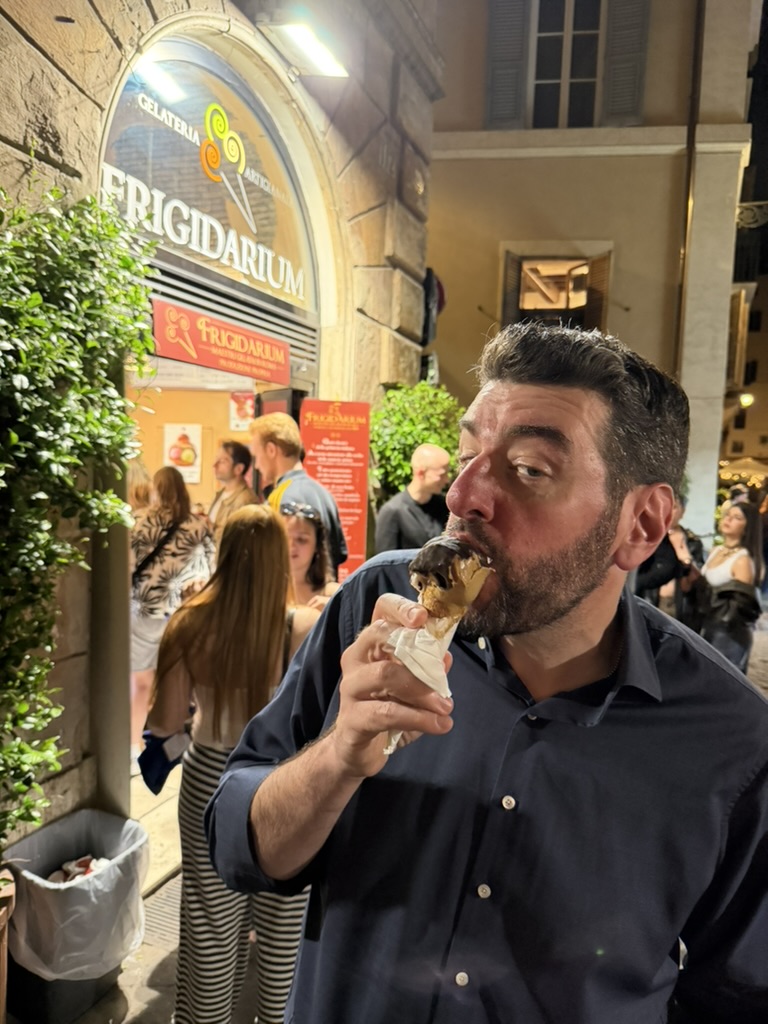
After dinner, a stop at Frigidarium near Piazza Navona, a must on every trip to Rome for me, originally a recommendation from my friend Frank. The chocolate-dipped cones are exceptional. One note of caution: if you’re going late at night and you’re caffeine-sensitive, be careful with the coffee gelato. They use a lot of espresso, and you will feel it. The line moves fast, the cones are enormous, and the whole operation happens on the street outside the tiny shop.
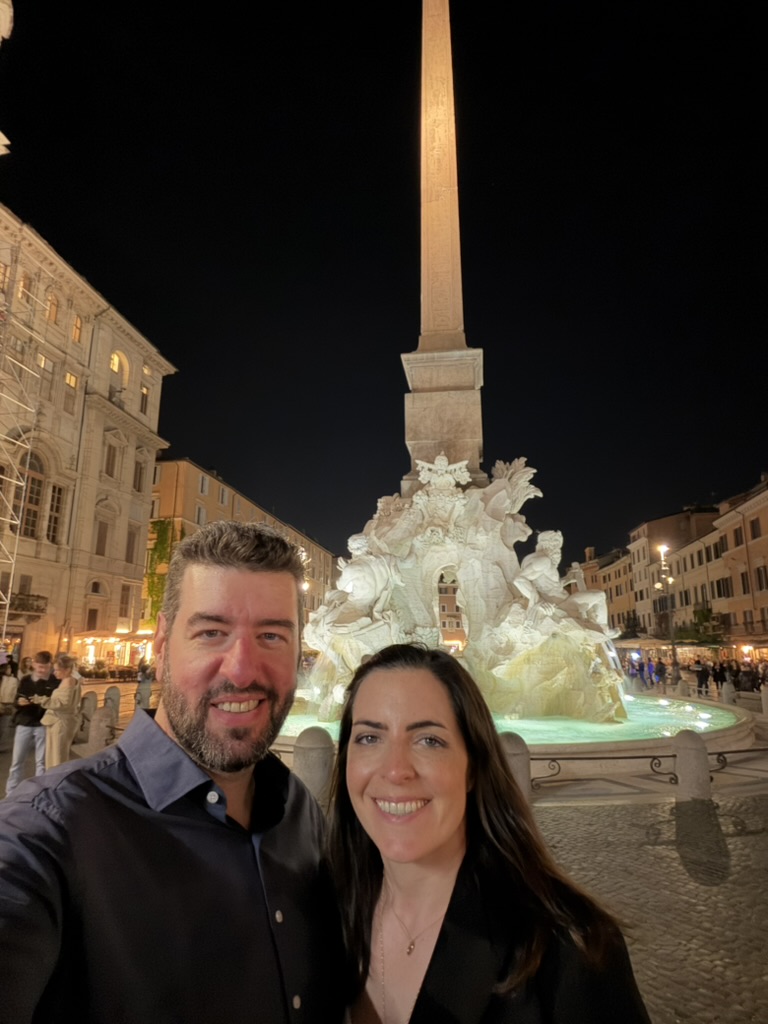
We finished the night at Piazza Navona, lit up at midnight with Bernini’s Fountain of the Four Rivers as the backdrop. The piazza at that hour is still lively: street artists, late diners, couples on the steps of the fountain. But the crowds that pack it during the day are gone. It’s one of the most beautiful urban spaces in the world, and seeing it at night with room to breathe is a privilege.
Our last morning in Rome started with breakfast at the hotel and a quick espresso before heading to Fiumicino for the ITA Airways flight to Nice. Rome does this to you on the way out: you pass the same streets you’ve walked all week and notice things you missed. We were already planning what we’d do differently on the next trip before we were even in the taxi.
French Riviera
Arriving at Cap-Ferrat (April 19)
We flew ITA Airways from Fiumicino to Nice, a short easy hop, and had a transfer waiting to take us to Grand-Hôtel du Cap-Ferrat, A Four Seasons Hotel. The drive along the coast as you approach Cap-Ferrat is the first signal that you’ve arrived somewhere genuinely different. The peninsula juts out into the sea between Villefranche and Beaulieu, lined with old money villas hidden behind stone walls and Mediterranean pines.
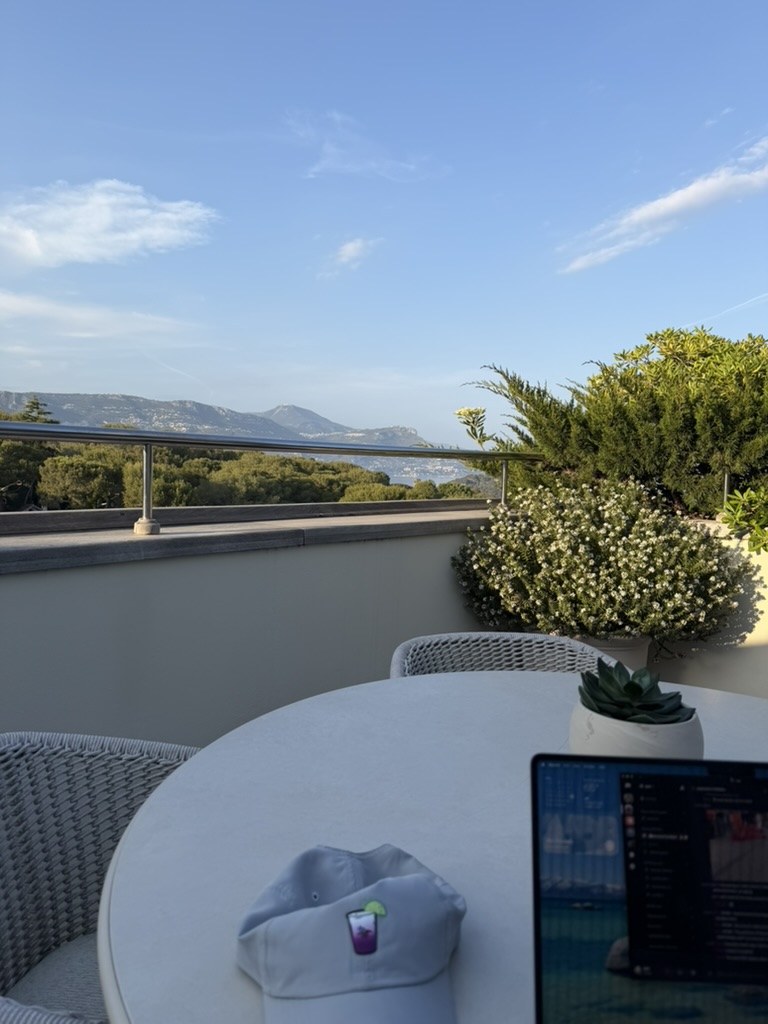
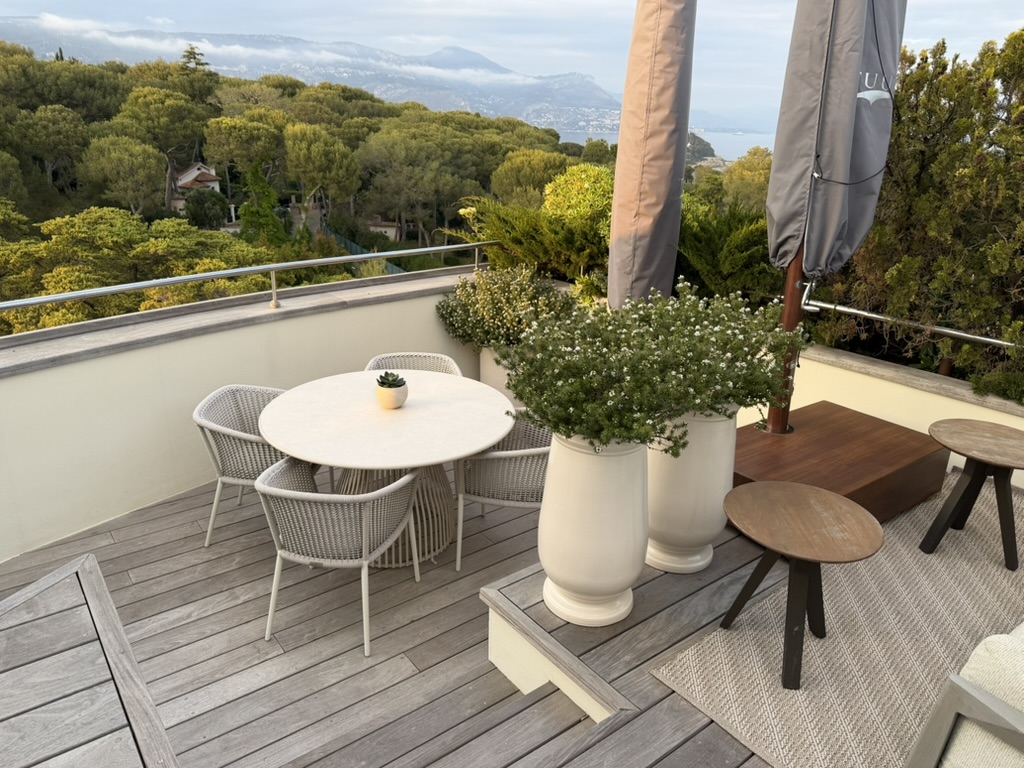
Checking in was an experience in itself. We walked the grounds first, taking in the gardens, the paths down toward the sea, the scale of the property, before going to the room. The hotel had placed us in one of two rooftop rooms, and it came with a private terrace with direct views toward Eze and Monaco. The transition from Rome, five days of cobblestones, noise, and sensory overload, to a clifftop terrace above the Mediterranean was jarring in the best possible way.
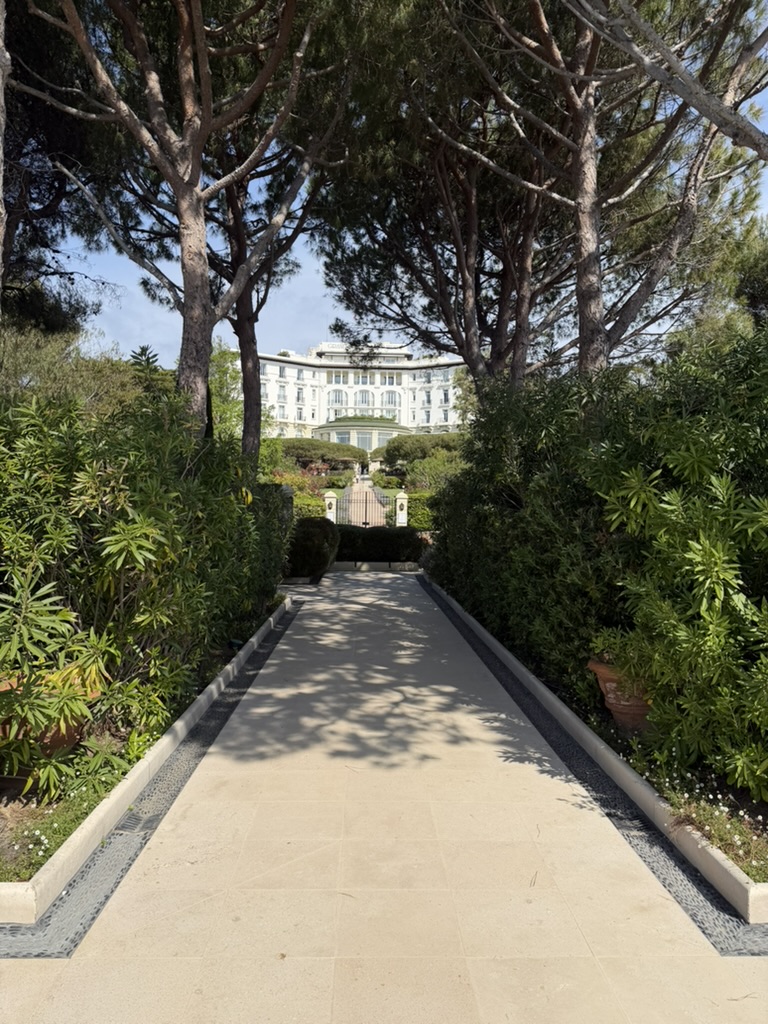
The property is extraordinary, and its history is part of what makes it feel different from a typical luxury hotel. The Grand-Hôtel du Cap-Ferrat opened in 1908 and has been one of the defining addresses on the Riviera ever since. Over the decades it has hosted an extraordinary roster of guests: Charlie Chaplin, Winston Churchill, the Duke and Duchess of Windsor, Elizabeth Taylor, Marlene Dietrich, and generations of European royalty. Four Seasons took over management in 2009 and has maintained the property without stripping away the character that made it famous. The gardens alone are worth spending time in: mature plantings, stone paths, views opening unexpectedly to the sea. The scale of the main building is grand without being cold, old without being tired. Walking the grounds on arrival felt like an orientation to a different way of moving through a day.
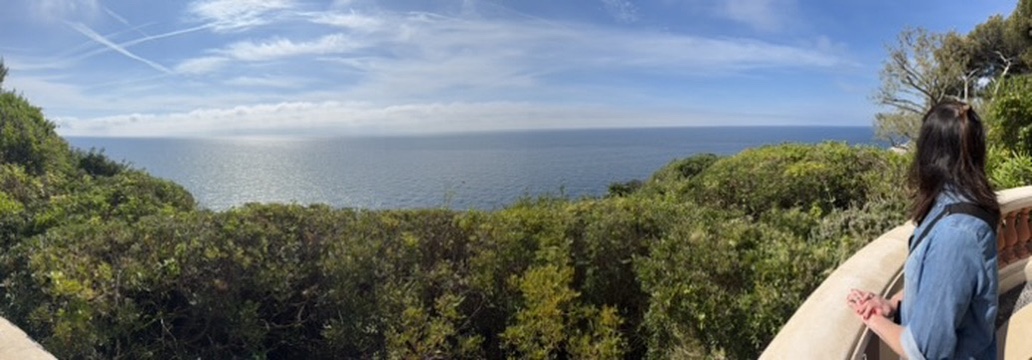
The rooftop terrace quickly became our favorite spot on the property. Coffee in the morning with the mountains of the Alpes-Maritimes in one direction and Monaco shimmering on the horizon in the other. Quiet, private, and completely removed from the rest of the world. The gardens and grounds also turned out to be a surprisingly rich spot for birdwatching — Ashleigh had her Merlin app out throughout our stay and identified a rose-ringed parakeet, a common hoopoe, common wood pigeon, Eurasian magpie, Eurasian collared dove, and a white wagtail. It was the kind of room that makes you reconsider your priorities.
For dinner that first night, the concierge sent us to La Mère Germaine in Villefranche-sur-Mer, a waterfront village a short drive from Cap-Ferrat. The restaurant has been there since 1938 and sits right on the harbor, one of those places that’s exactly what it looks like and doesn’t need to be anything else. The food was excellent once it arrived, though we waited about an hour between ordering and the first course. Worth the patience. Villefranche itself is a beautiful village: steep streets, colorful buildings, a deep natural harbor, and worth an evening wander even if you’re not stopping to eat.
Spa, Pool & African Queen (April 20)
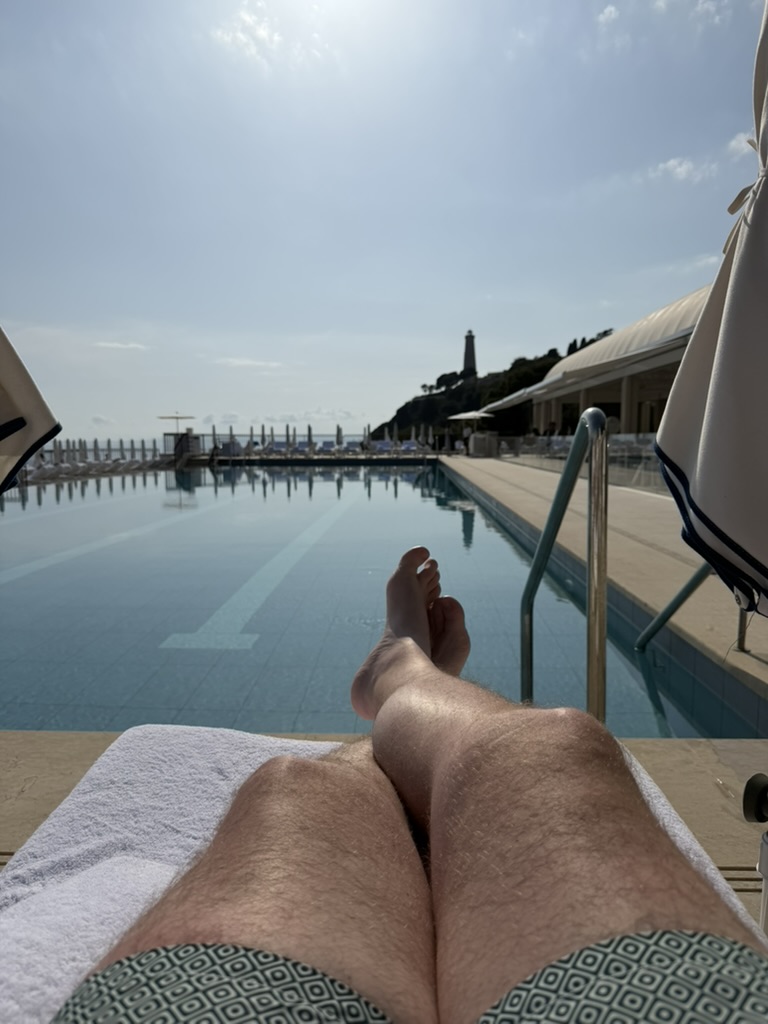
A slower day, by design. I had a massage at the Four Seasons spa; Ashleigh had a facial. We met in the thermal pools after and then spent the afternoon at Club Dauphin, the hotel’s clifftop pool and beach club. Getting there is half the fun: the hotel has a panoramic funicular that carries you down the steep hillside to the club, with views opening up over the sea as you descend. The infinity pool sits above the water with an unobstructed view toward the horizon, and the parade of activity below never stops: yachts, sailboats, kayaks, and hydrofoils cutting across the bay throughout the afternoon. It is exactly as good as it sounds, one of those rare spots where the setting matches the reputation. Sun loungers, attentive service, the Mediterranean below, nowhere to be.
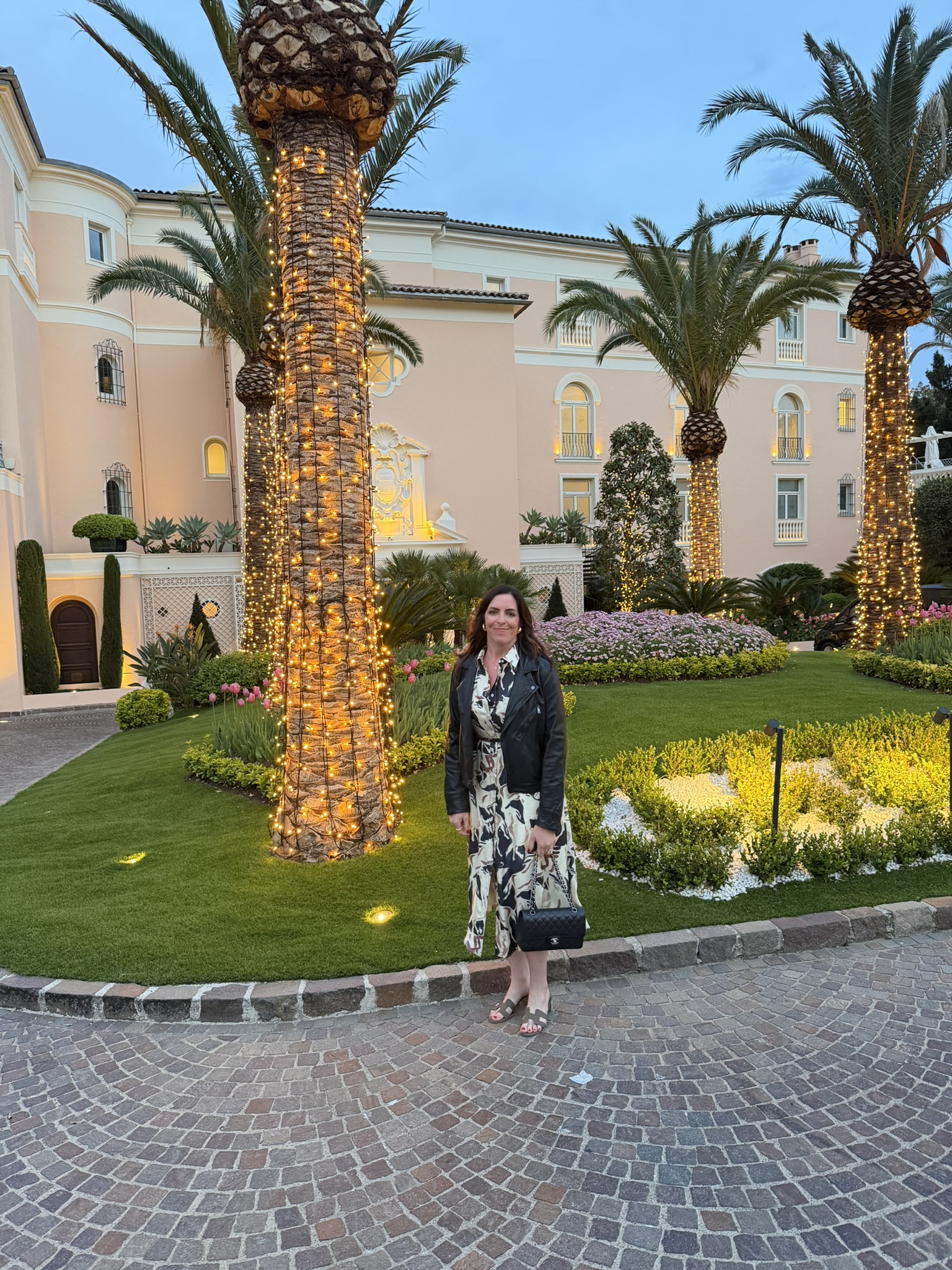
For the evening the concierge directed us toward Beaulieu-sur-Mer, a neighboring village with a similar character to Villefranche: small and waterfront and unhurried. The pattern of these towns, pretty harbor, seafood restaurants, a handful of elegant hotels, repeats pleasantly along this stretch of coast, and Beaulieu is one of the better examples. We started with drinks at La Réserve de Beaulieu, a Belle Époque palace hotel right above the sea. The bar terrace is one of the most glamorous settings on the Riviera: pink facade, lit palm trees, the harbor glittering below.
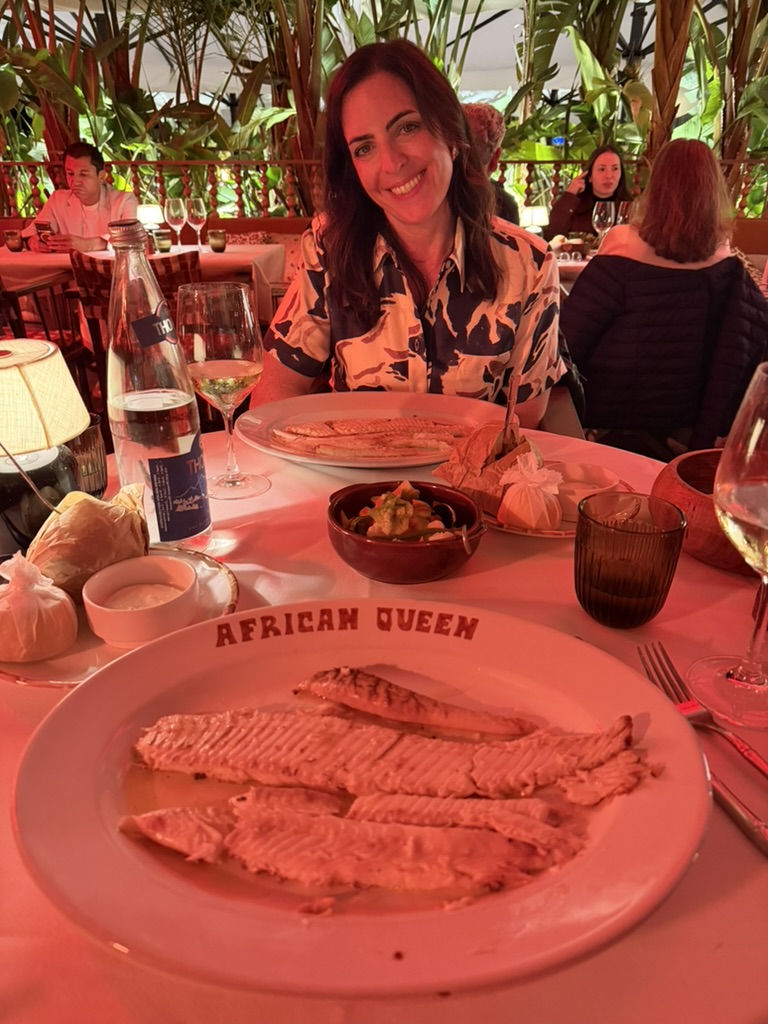
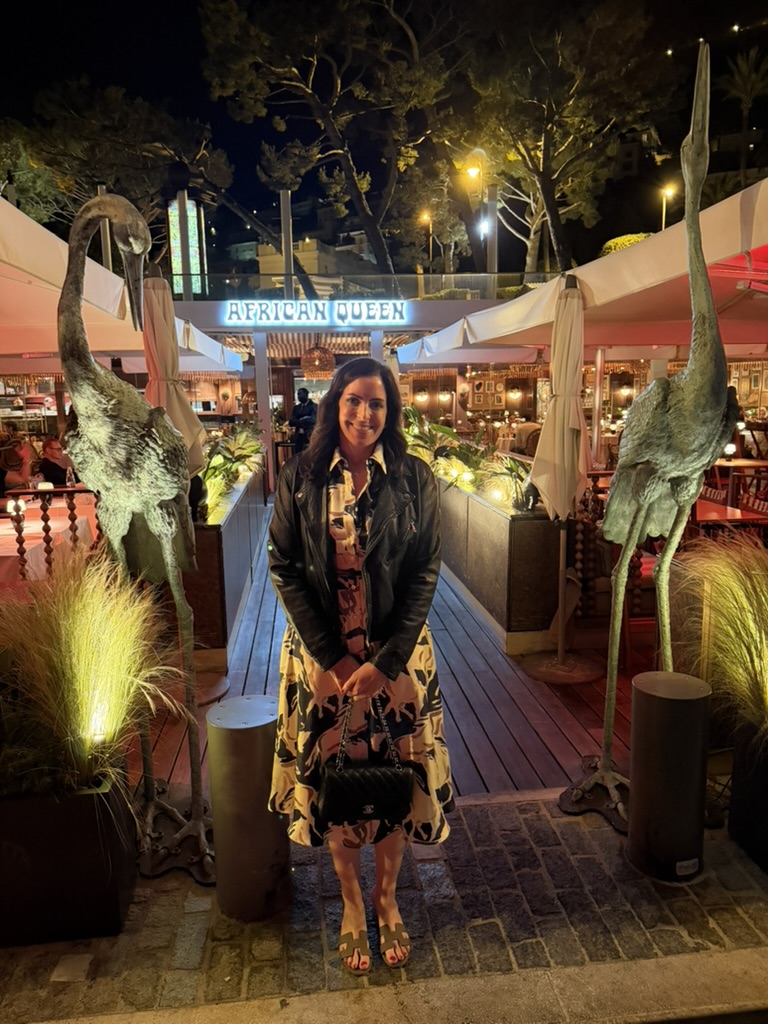
Dinner was at African Queen on the Beaulieu harbor, a Riviera institution that lives up to the reputation. Lively atmosphere, great seafood, strong wine list, and the kind of place that fills up with locals and visitors in equal measure. We ate outside on the patio right on the harbor, watching the boats. We started with fritto misto and followed it with a whole Dover sole, filleted tableside. The concierge was two for two.
The entrance to African Queen, flanked by bronze cranes, sets the tone: theatrical and confident, the kind of restaurant that knows exactly what it is and has been doing it for decades. It’s the sort of place you’d go back to every trip without needing a reason.
The Porsche Day: Eze, Monaco & Pavyllon (April 21)
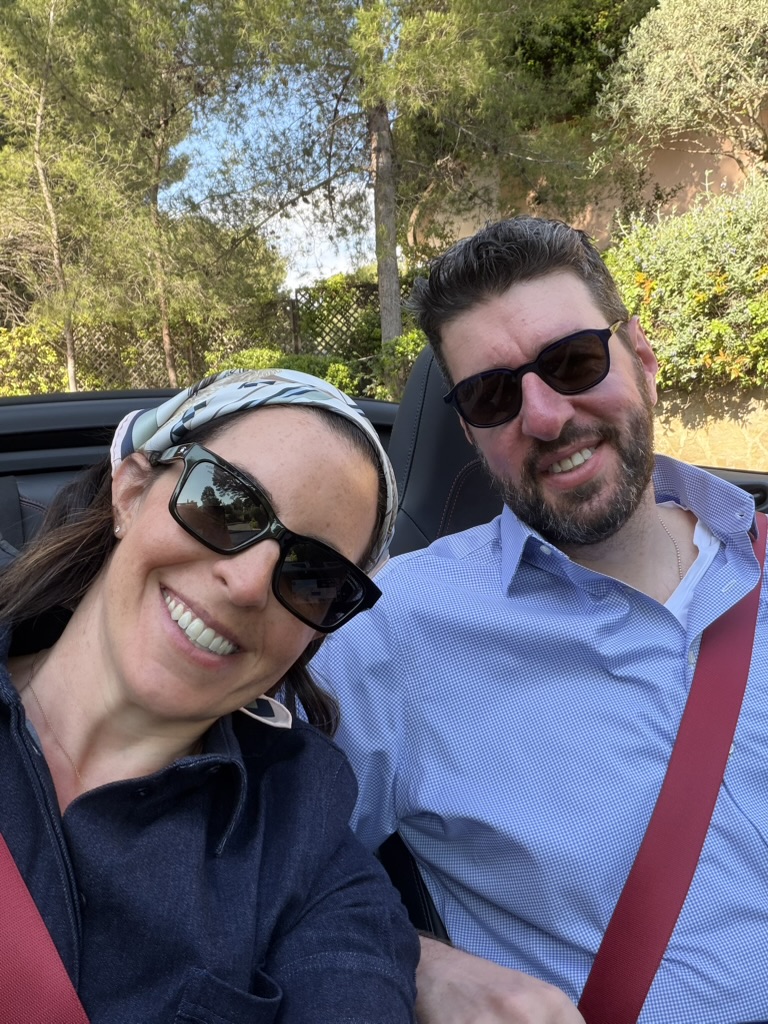
We rented a Porsche 911 Carrera 4 GTS convertible, delivered to the hotel in the morning, specifically to make the most of this day. The roads between Cap-Ferrat and Monaco, particularly the Moyenne and Grande Corniche, are among the best driving roads in Europe, and doing them in an open car on a clear April day is not something you take for granted. Ashleigh found the perfect Riviera solution: sunglasses and a silk scarf. Top down from the moment we left the hotel.
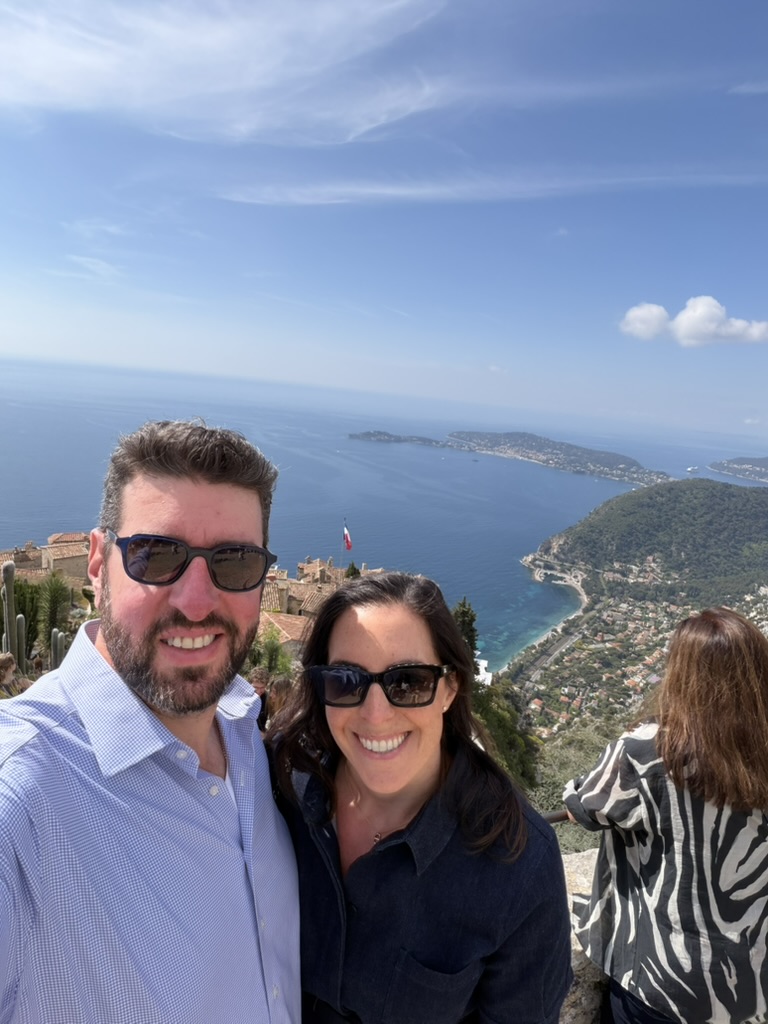
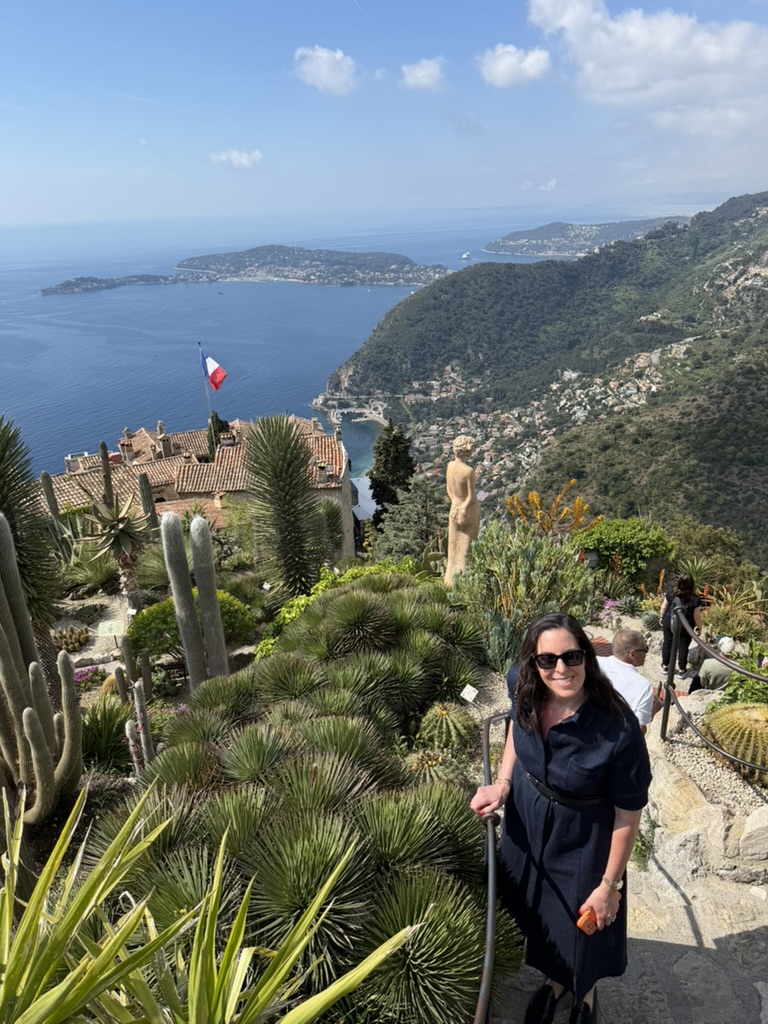
First stop was Eze Village and the Jardin Exotique, perched 429 meters above the sea. The village itself is one of those places that could easily be dismissed as too picturesque to be real, but it earns it. The medieval stone streets wind up steeply to the garden at the top, and the views from there are genuinely breathtaking. Cap-Ferrat, Villefranche, Monaco, Italy on clear days, all of it spread out below a garden of cacti and succulents that feels like it shouldn’t be at this altitude.
The Jardin Exotique is a proper botanical garden, well-curated, with sculptures integrated throughout the plantings and viewpoints positioned to maximize the drama of the drop to the sea below. Allow at least an hour. The village around it is small but worth exploring before or after; there are good shops and a handful of restaurants, and the stone architecture is immaculate. One thing we didn’t get to on this trip was dinner at Château de La Chèvre d’Or — a Michelin-starred restaurant perched in the village with views that must be extraordinary. There simply wasn’t time to fit it in, but it’s firmly on the list for a return visit.
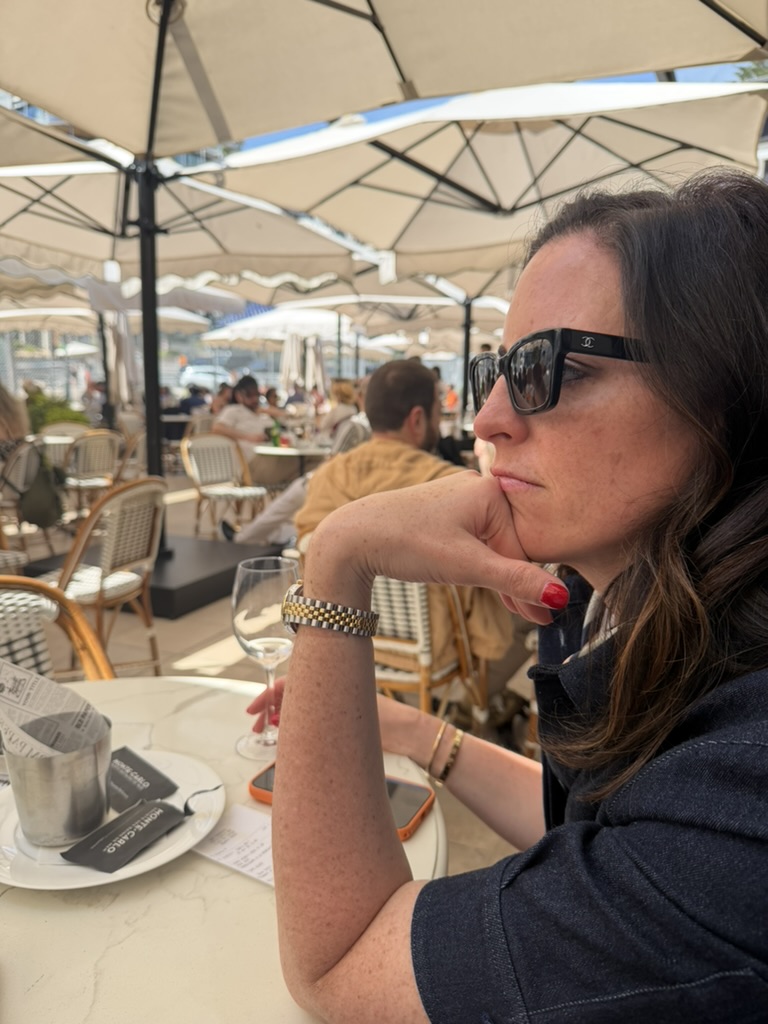
From Eze we drove directly into Monaco and parked at Casino Square. Monaco is essentially Disneyland for rich people: a tiny sovereign city-state where the cars are all supercars, everything is immaculate, and the whole place feels like it was designed as a backdrop for excess. It’s completely over the top and absolutely worth a full day. Pulling a Porsche 911 convertible up to the valet at the Casino was an experience: the area around Place du Casino is a constant parade of extraordinary cars, and the tourists on the sidewalk were filming the whole thing. When in Monaco. We went straight to Café de Paris for a classic Monaco treat, a Barbajuan, the traditional fried pastry filled with Swiss chard and ricotta that’s essentially Monaco’s signature snack, and coffee at a terrace table with a direct view of the Casino facade.
After that, we walked over to the Fairmont Hairpin, the most famous corner on the Formula 1 circuit, a near-180° bend beneath the Fairmont Hotel where F1 cars barely get out of second gear. From there, some shopping around Hôtel de Paris: Hermès, Chanel, Cartier, where we picked up a ring for Ashleigh, Louis Vuitton, Audemars Piguet, and Rolex. The blocks around Casino Square are essentially an open-air luxury mall with better architecture than most.
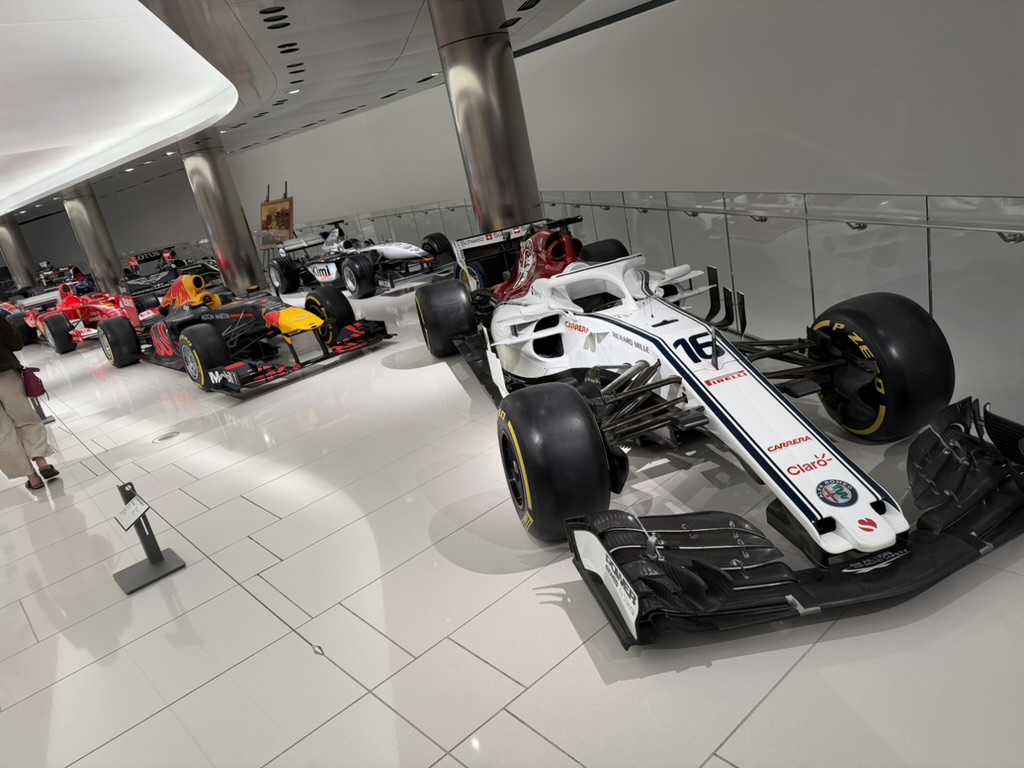
We then visited the Collection de Voitures du Prince, Prince Rainier III’s personal car collection, over 100 historic vehicles including royal state cars and Formula 1 racers. The F1 section alone is worth the trip: cars from multiple eras displayed together in a purpose-built space, including machines that actually raced on the streets outside. If you have any interest in cars at all, don’t skip this.
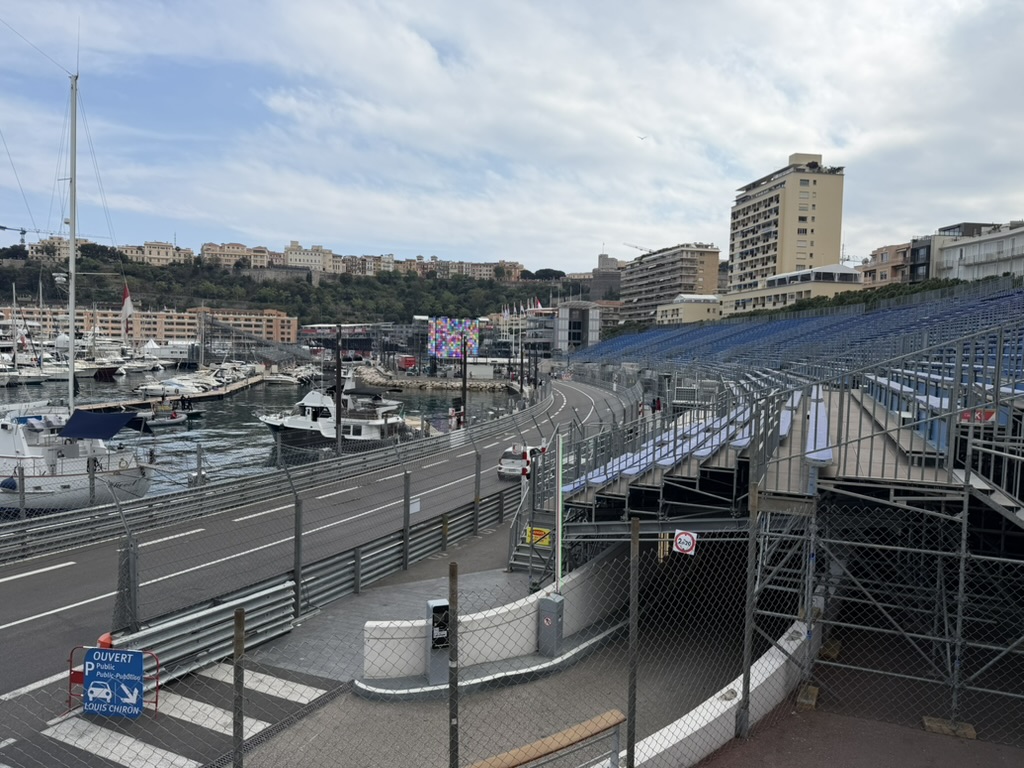
After a quick bite at Caffè Milano in Fontvieille, which overlooks the marina, we got back in the Porsche and drove the Grand Prix circuit, the tunnel, the harbor section, the pit straight, up to the Prince’s Palace for views over the port, and back out through Fontvieille. Top down the whole way. The grandstands for the upcoming race were already going up along the harbor, which added a layer of context: imagining what those streets look like packed with eighty thousand people watching cars thread through barriers at speed.
We stopped briefly in Saint-Jean-Cap-Ferrat village on the way back to the hotel, a small charming harbor town that fits a pattern you notice quickly on this stretch of coast: every village is prettier than it has any right to be. Bobbing boats, pastel storefronts, a few good restaurants facing the water. Dinner that night was at Pavyllon Monte-Carlo inside the Hôtel Hermitage, Yannick Alléno’s one-Michelin-star restaurant with a tasting menu focused on sauces and seasonal French ingredients. We ate on the terrace overlooking Monaco, which made an already excellent meal feel like an event. After dinner, we went into the Casino de Monte-Carlo: not very busy on a Monday, craps tables closed, but the rooms are worth seeing regardless. The Casino has been a film location for decades, most famously in several James Bond films including GoldenEye and Never Say Never Again, and you feel that cinematic weight the moment you walk through the doors. A couple of practical notes if you’re planning to go: you need your physical passport to enter, not just a photo of it, and depending on the time of day men are required to wear a jacket, so plan accordingly.
Old Nice & Le Cap (April 22)
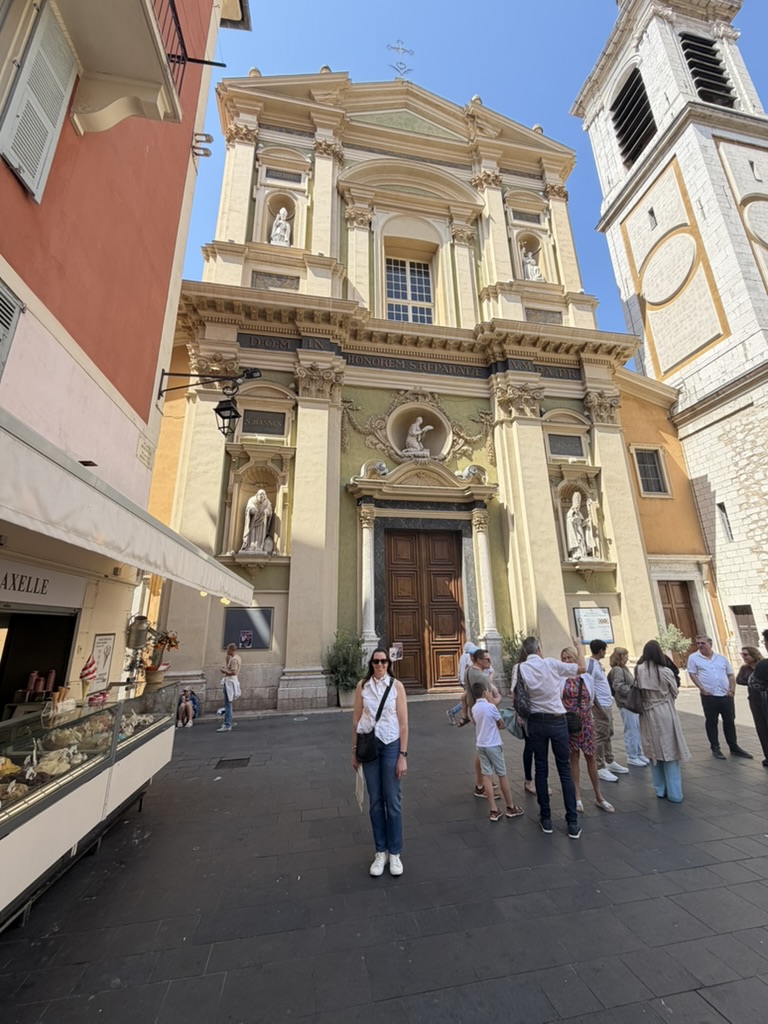
Our last full day started with a drive to Vieux-Nice, Nice’s baroque old quarter. We started at the flower market on Cours Saleya, wandered through the narrow lanes past the ochre and yellow buildings, stopped at Café Bozzi for coffee, and spent time shopping on Avenue de Verdun on the way back out. It’s an easy morning and a good antidote to the intensity of Monaco the day before. The old town has a different character from anywhere else on the Riviera, more Italian than French in feel, louder, more colorful, with a street life that doesn’t feel performed for visitors.
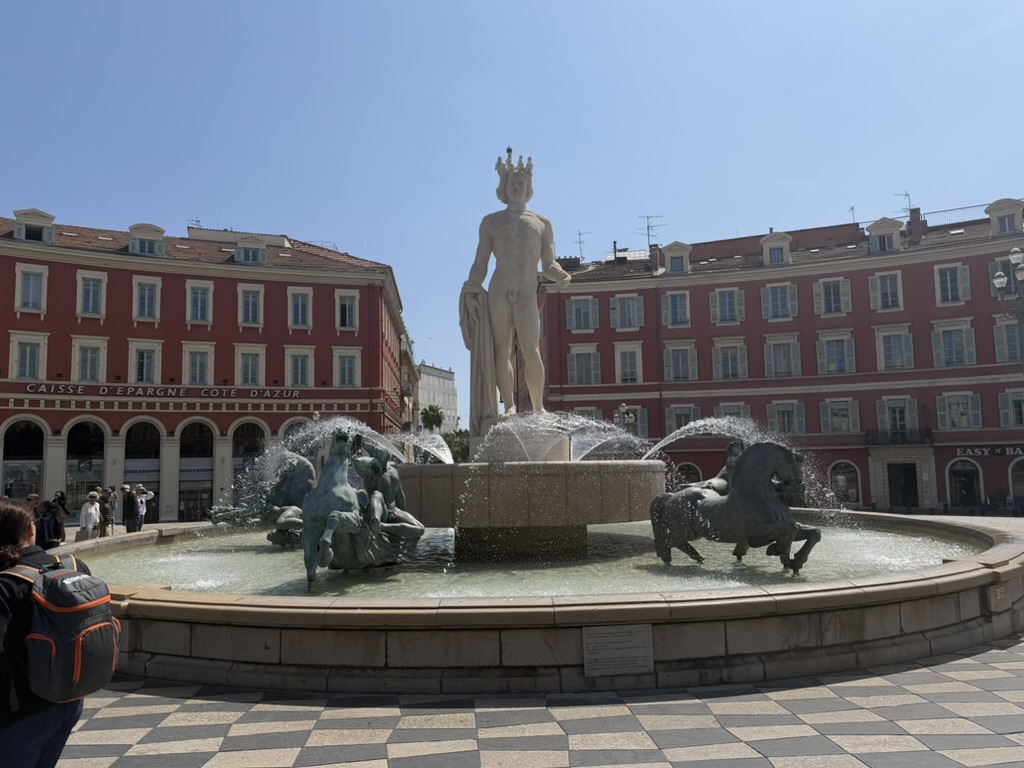
Place Masséna, at the edge of the old town, is one of the great urban squares of the south of France: the red buildings, the fountain, the tram lines running through it. Worth spending some time there before heading up into the old lanes. The contrast between the order of the square and the maze of the old town behind it is part of what makes Nice work as a city.
Back at the hotel for a final afternoon at Club Dauphin, the one day we’d earned a completely unstructured few hours by the pool before the last dinner of the trip. No itinerary, no reservations, nowhere to be until evening. The pool, the sun, the sound of the sea below. One of those afternoons that’s hard to improve on.
The rooftop terrace that last evening was the best version of itself: low light, the mountains going purple in the distance, Monaco glittering on the water. We’d had coffee up there every morning and ended most evenings there. It’s the kind of space that makes you think differently about how you want to spend your time.
We finished the trip at Le Cap, the hotel’s Michelin-starred restaurant perched above the Mediterranean. The food was exceptional: Provençal-inflected modern French, an outstanding wine list, a terrace setting that makes the meal feel like an event. We did the six-course tasting menu, which in retrospect was probably one course more than we needed — the four-course would have been the right call — but it was the best meal of the French side of the trip without question. A number of the restaurants we visited along the Riviera offered a chocolate soufflé on the dessert menu, but the one at Le Cap was the best of the trip by a clear margin. But the highlight of the evening was a tour of the wine cellar: wall-to-wall bottles, serious depth across every French region, and an extraordinary display of Domaine de la Romanée-Conti going back decades. The kind of cellar that makes you want to sit there for the rest of the evening and just look at labels.
What I’d Tell Someone Planning This Trip
On Rome: You can do the landmarks on a first visit, but the city rewards coming back with a different agenda. The Doria Pamphilj and Borghese galleries are both better than the more famous museums, and require far less patience. The Roscioli group, and the wine cellar especially, is operating at a genuinely high level right now. The Cielo Rooftop Bar at Hotel de la Ville is worth staying there just for the sunset access, and ask for Matteo.
On the Riviera: Cap-Ferrat is quieter and more residential than the other Riviera towns, which is exactly the point. The Four Seasons property is exceptional; try to get a room with a terrace. Rent a car for at least one day; the roads are too good not to drive. Villefranche and Beaulieu are both worth dinner; Eze is worth a morning. Monaco deserves a full day if you’re a car or F1 person; the Prince’s collection alone justifies the visit.
The combination works well because the two destinations ask different things of you. Rome is active, layered, and demands your attention. The Riviera is the reset that follows.
Restaurants & Bars
Rome
- Armando al Pantheon — dinner, April 15
- La Casa del Caffè Tazza d’Oro — coffee, April 16
- Caffè Sant’Eustachio — coffee, April 17
- Antico Forno Roscioli — pizza al taglio, April 17
- Rimessa Roscioli — wine tasting dinner, April 16
- Taverna Trilussa — dinner, April 17
- Jerry Thomas Speakeasy — cocktails, April 17
- Cesare al Pellegrino — dinner, April 18
- Frigidarium — gelato, April 18
- Cielo Rooftop Bar at Hotel de la Ville — aperitivo, multiple evenings
French Riviera
- La Mère Germaine — dinner, April 19 (Villefranche-sur-Mer)
- La Réserve de Beaulieu — drinks, April 20 (Beaulieu-sur-Mer)
- African Queen — dinner, April 20 (Beaulieu-sur-Mer)
- Café de Paris — snack and coffee, April 21 (Monaco)
- Caffè Milano — lunch, April 21 (Fontvieille, Monaco)
- Pavyllon Monte-Carlo — dinner, April 21 (Monaco)
- Café Bozzi — coffee, April 22 (Vieux-Nice)
- Le Cap — dinner, April 22 (Cap-Ferrat)